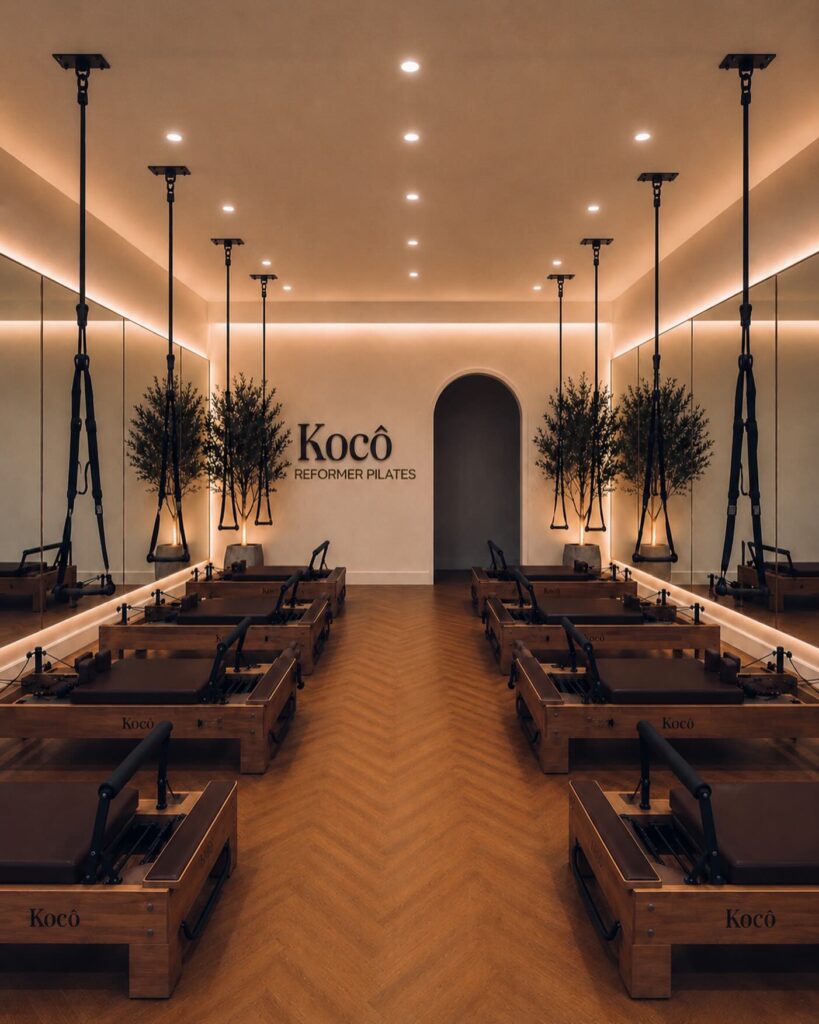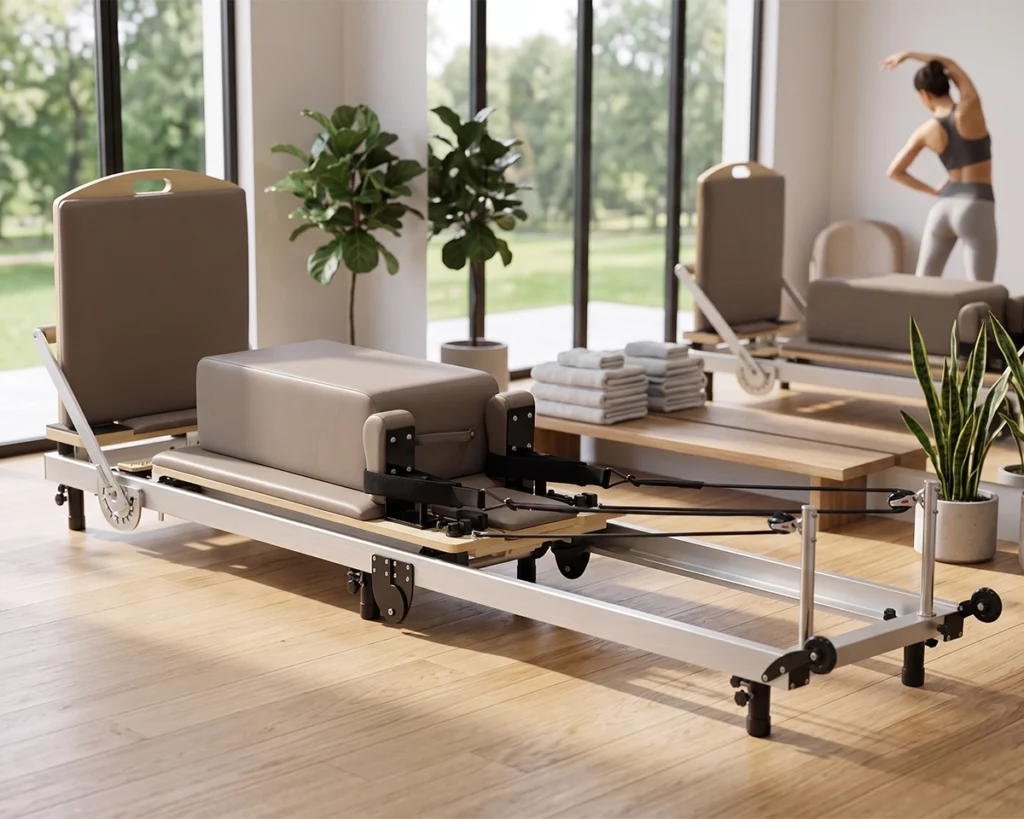
Direct Answer: A commercial Pilates reformer is engineered to run 8 to 12 group classes per day under varied user weights (up to 150 kg standard user load) without losing carriage alignment or spring tension. A home Pilates reformer is built for 1 to 2 light sessions per day, using thinner frame walls, lighter rails, fewer spring positions, and lower-density upholstery. Choosing a home-grade machine for a commercial studio typically leads to bearing noise, rail wear, and upholstery cracking within 6 to 12 months.
At Cheer Pilates Equipment (founded 2015, 7,500 m² ISO 9001 & CE certified factory in Ningjin, Shandong, China), we manufacture both commercial studio fleets and compact foldable home units. Below are the 8 concrete engineering differences studio owners, gyms, and distributors should verify before requesting a factory quote.
Commercial vs Home Pilates Reformer: Side-by-Side Comparison
| Specification | Commercial Studio Reformer | Home / Light-Use Reformer |
|---|---|---|
| Daily Usage Design | 8–12 classes/day (50+ hours/week) | 1–2 sessions/day (5–10 hours/week) |
| Frame Construction | Heavy-wall anodized aluminum, solid maple/oak/walnut, or reinforced steel | Lighter aluminum extrusions or thinner folding frames |
| Standard User Load | 150 kg commercial rating | 100–120 kg typical home rating |
| Carriage & Rail System | Precision-machined tracks with heavy-duty quiet bearings and side guide rollers | Basic wheel tracks; prone to play under high-frequency lateral loads |
| Springs | 5–6 calibrated German Wagner springs with consistent resistance curves | 4–5 standard springs; faster tension drift under heavy daily use |
| Footbar & Locking | Multi-position quick-adjust bar with positive mechanical locks for fast class transitions | Fewer angles; slower manual adjustment |
| Upholstery & Foam | 1.0 mm commercial microfiber leather + high-density EVA/rebound foam resistant to daily disinfection | Thinner PU leather and softer foam that compresses faster |
| Tower / Cadillac Upgrade | Built to support half tower, full tower, and jumpboard loads safely | Usually standalone only; not rated for full tower attachments |
1. Frame Rigidity and Material Thickness
In a group class, clients step onto the standing platform, push off jumpboards, and load the footbar dynamically. Commercial frames—whether heavy-wall commercial aluminum reformers or solid maple, oak, or walnut wooden reformers—are engineered for torsional rigidity so the tracks stay parallel year after year. Home reformers prioritize low shipping weight and foldability, which reduces structural stiffness under commercial traffic.
2. Carriage Bearings, Track Tolerance, and Noise
The carriage glide is the single detail instructors notice in the first 30 seconds. Commercial reformers pair precision-aligned rails with sealed commercial bearings and horizontal guide wheels so the carriage glides silently even when 12 machines run simultaneously in an echo-prone studio room. Home machines often use simpler wheel assemblies that feel acceptable on day one but develop rattle and uneven tracking after a few hundred hours.
3. Spring Quality and Consistency Across a Fleet
In a 10-reformer studio, a red spring on Reformer #1 must feel identical to a red spring on Reformer #10. Cheer Pilates equips commercial machines with German Wagner springs tested under load for uniform tension curves and fatigue resistance. Lower-cost home springs lose elasticity unevenly, creating inconsistent classes and higher replacement frequency.
4. Footbar Speed and Class Turnaround
Commercial instructors reset footbars, headrests, gearbars, and ropes 50+ times a day. Heavy-duty footbar hinges and positive locking pins save minutes every class and prevent pinched fingers or slippage. If you are planning a multi-reformer room, see our Pilates studio opening and equipment guide for practical layout and machine count formulas.
5. Upholstery Durability Against Daily Disinfection
Commercial reformers are wiped down after every single session. Standard home PU vinyl dries out and cracks under alcohol-free studio sprays and constant sweat exposure. Commercial machines use 1.0 mm microfiber leather (including our patterned slip-resistant microfiber leather) over high-density foam with reinforced stitching.
6. When a Foldable or Home-Style Reformer Makes Sense
Compact and folding Pilates reformers are the right choice for private home gyms, personal trainers with limited space, hotel suites, or distributors targeting direct-to-consumer retail. However, for boutique group studios, athletic clubs, and rehabilitation clinics running back-to-back classes, a full-frame commercial reformer delivers far lower total cost of ownership.
7. Spare Parts, Warranty, and Factory Support
A broken wheel or worn strap in a commercial studio means a lost class spot immediately. Cheer Pilates provides a 1-year warranty on frames and wear parts (with extended frame warranties negotiable for distributors) and dispatches warranty replacement parts by air within 3 days. Standard models have a 1-unit MOQ (7–10 days shipping), logo customization starts from 1 unit, and full OEM/ODM manufacturing starts from 5 units.
Frequently Asked Questions
Can I use a home Pilates reformer in a small commercial studio?
It is not recommended for daily group classes. Home reformers are built for 1–2 sessions per day; under commercial traffic (8–12 classes/day), bearings, springs, and upholstery wear out rapidly and void typical home warranties.
What is the standard weight capacity of a commercial Pilates reformer?
Cheer Pilates commercial reformers are engineered for a 150 kg standard user load, with heavy-wall aluminum, solid hardwood, or reinforced steel frames tested for dynamic studio movements.
Can I order just 1 commercial reformer as a sample before equipping my whole studio?
Yes. Our minimum order quantity (MOQ) for standard commercial models is 1 unit, shipping in 7–10 days. You can test the carriage glide, German Wagner springs, and upholstery firsthand before placing a studio or container order.
What drives the price difference between home and commercial reformers?
Frame wall thickness, precision-machined rails and sealed bearings, German Wagner springs, 1.0 mm microfiber upholstery, multi-position footbar mechanisms, and export-grade packaging account for the difference. Request a tailored factory quote with your model list and destination.
Need help choosing the right models for your studio or distribution line? Browse our commercial studio solutions or request a factory-direct quote—our team replies within 12 hours with EXW, FOB, CIF, CFR, or DDP options.