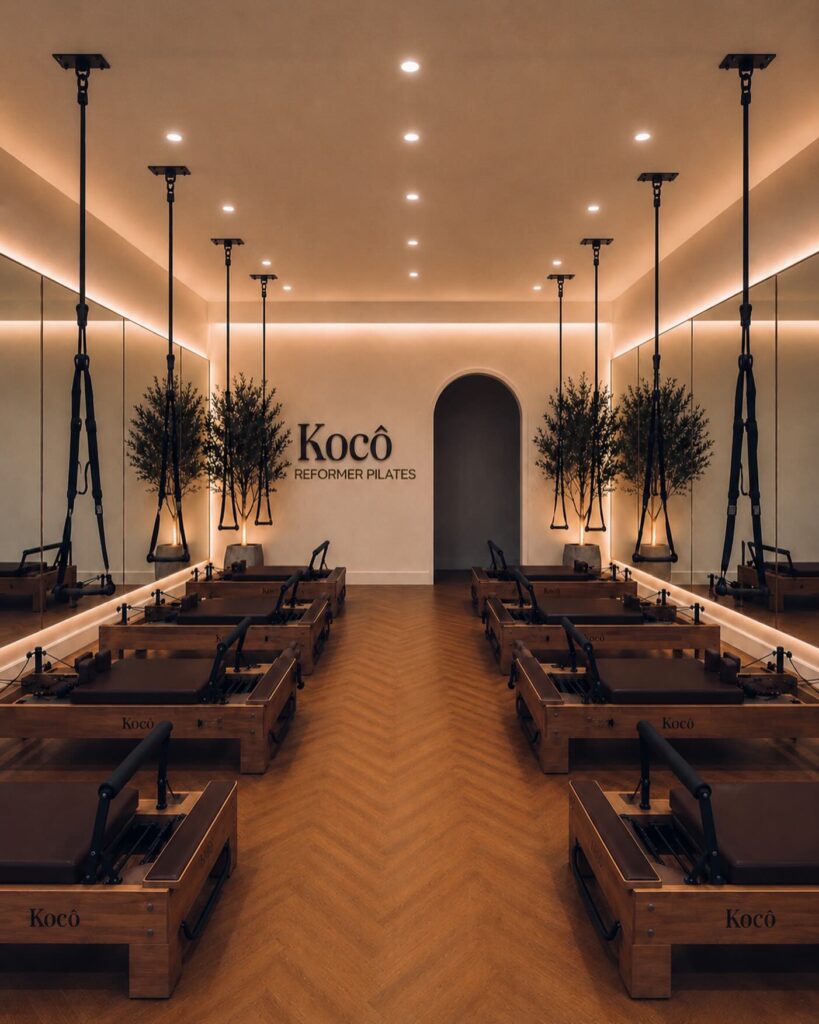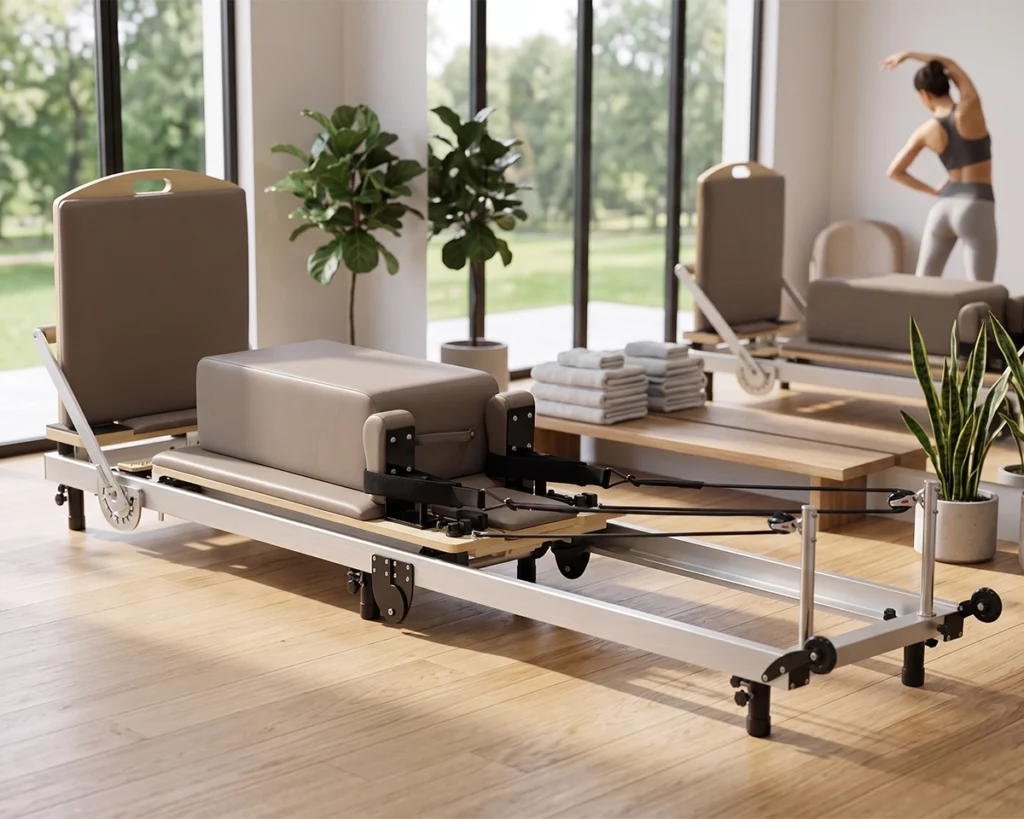
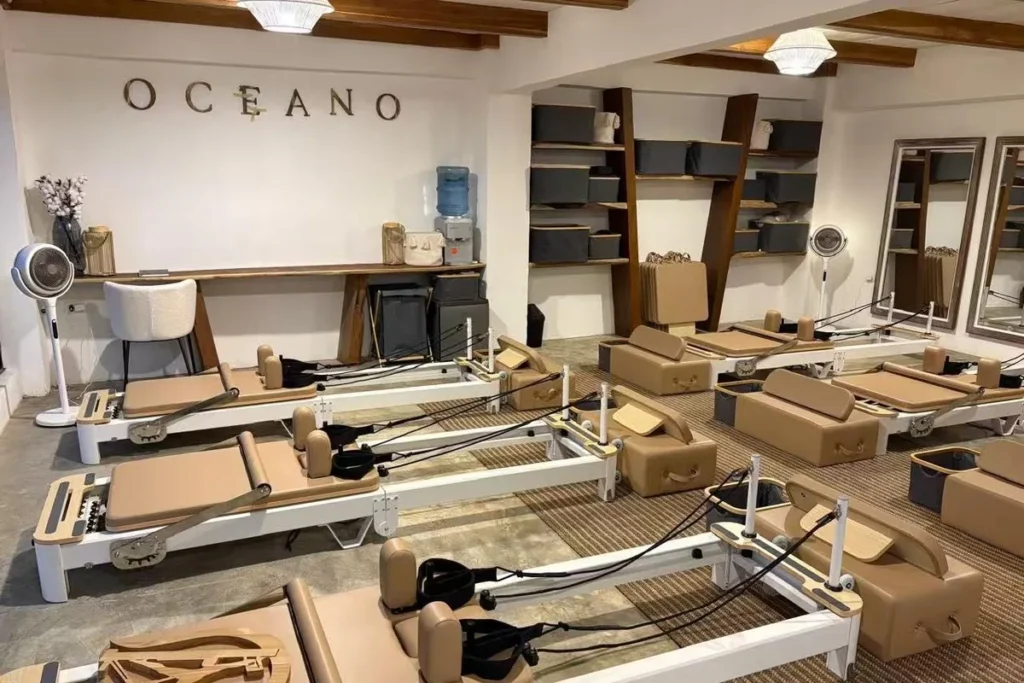
Short answer: when planning how to open a Pilates studio, settle your class format and room layout before you request equipment quotes. Most profitable studios open with a core bank of commercial reformers sized to their first-year timetable (typically 4–6 units for a boutique room or 8–12 for a commercial group room), test one sample first, and schedule factory production plus ocean or air transit at least 8–12 weeks ahead of launch.
Business plans usually focus on rent, instructors and booking software, and treat equipment as a last-minute purchase. From our factory side—supplying studios in 80+ countries since 2015—the studios that open on schedule and avoid costly rework do the opposite: they design the room around real machine dimensions, test one sample reformer with their lead instructors, and lock in spare-parts support before paying a deposit. This 7-step guide covers how to open a Pilates studio from the equipment, layout and sourcing perspective.
Cheer Pilates Equipment (founded 2015, 7,500 m² ISO 9001 factory in Dezhou, Shandong) supplies CE certified commercial reformers, towers, Cadillacs, chairs and barrels to studios in 80+ countries. Standard models start at MOQ 1 unit (ship in 7–10 days), custom logo branding is available from 1 unit, OEM starts at 5 units, and warranty spare parts ship within 3 days.
Step 1: Define your studio model and equipment mix
Every equipment decision depends on how your studio earns revenue. Before asking factories for catalogues, choose which of the three common studio formats you are building:
| Studio format | Typical reformer room size | Recommended opening equipment mix | Best for |
|---|---|---|---|
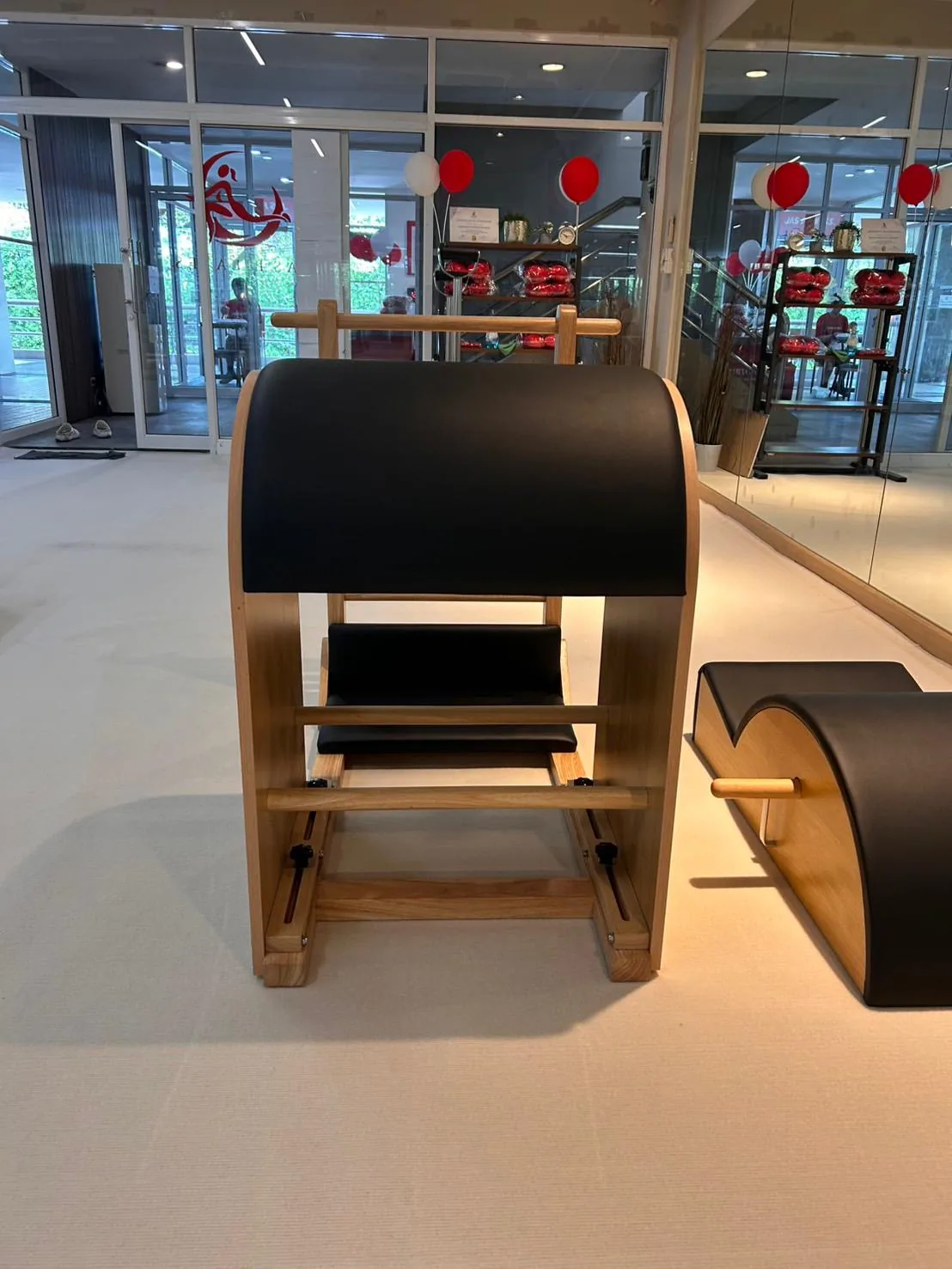
| Boutique / private-first studio | 50–80 m² | 4–6 reformers (1–2 with half tower) + 1 Pilates combo chair + 1 ladder barrel | High-ticket semi-private & 1-on-1 coaching |
| Commercial group reformer studio | 90–150 m² | 8–12 commercial aluminum or wooden reformers + jumpboards & sitting boxes | Fastest revenue per square metre via group timetables |
| Multi-format / flagship studio | 160+ m² | 10–16 reformers + dedicated private room (Cadillac, chair, barrel, spine correctors) | Scaling brands & studios combining group + rehab/private |
If you are unsure whether to add towers or a Cadillac on day one, read our comparison of reformer vs half tower vs Cadillac and check every machine name in our Pilates studio equipment names glossary.
Step 2: Measure your room, walkways and delivery access
One of the most common mistakes when learning how to open a Pilates studio is counting how many machines physically fit wall-to-wall instead of leaving space for instructors to teach. Instructors must walk comfortably between carriages to adjust springs and cue alignment, and tower or Cadillac frames require enough ceiling clearance.
- Walkways: leave clear circulation between reformers and at the footbar/head ends for boxes and jumpboards.
- Ceiling height: verify vertical clearance before ordering half-tower, full-tower or Cadillac frames.
- Doorways, stairs and lifts: check crate dimensions and turning radii before shipment—not on delivery day.
For worked floor plans with real machine measurements, see our Pilates studio layout and reformer spacing guide.
Step 3: Choose the right frame, springs and upholstery
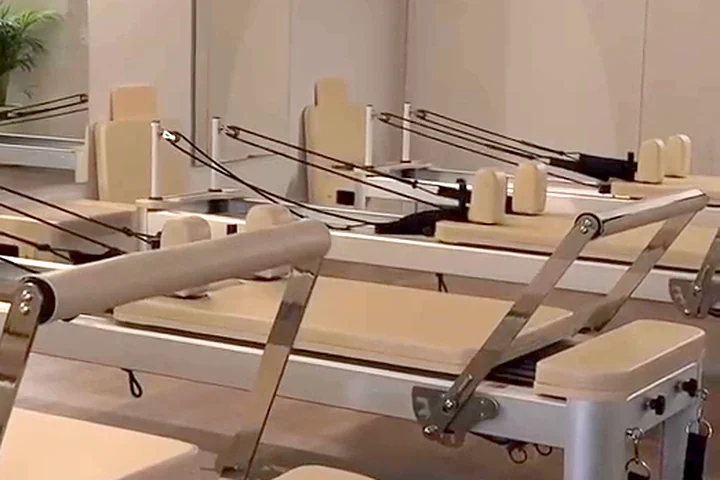
Commercial studios run 6–12 classes per day. Domestic-grade frames loosen quickly under that workload. Compare machines on four structural points:
- Frame material: aluminum offers a light, modern aesthetic and easy floor cleaning; solid maple, oak or walnut gives a warm boutique feel; heavy-duty steel suits high-intensity mega reformer classes. Compare options in aluminum vs wood Pilates reformers.
- Load rating: verify a commercial maximum user weight (Cheer reformers have a standard maximum user load of 150 kg).
- Spring system: consistent resistance is what instructors notice first. Every spring-loaded Cheer reformer uses German Wagner springs.
- Upholstery: choose commercial microfiber leather (0.8–1.2 mm, including our new 1.0 mm patterned microfiber leather) that matches your studio palette.
Step 4: Understand what drives your equipment budget
We do not publish fixed price lists because equipment budgets vary by model, frame material, tower additions, accessories, custom branding and destination freight. Instead, budget across five clear buckets: base machines, essential accessories (sitting boxes, jumpboards, straps), optional studio branding (UV logo printing or OEM colors), international shipping/duties, and a small spare-parts buffer. For a detailed breakdown, see what drives commercial Pilates reformer cost.
Step 5: Order a sample first and check factory proof
Never order 10 or 15 reformers without testing the carriage glide and spring feel first. Because Cheer’s MOQ is 1 unit for standard models (and logo branding is available from 1 unit; full OEM starts at 5 units), you can test one machine with your instructors before committing to the full room. Always verify the supplier’s business licence, ISO 9001 certificate, CE documents for your exact models, and request a live video tour of the production floor. See our full factory vetting checklist.
Step 6: Plan production, shipping and customs timelines
Working backwards from your studio opening date prevents paying rent on an empty room:
| Stage | Typical timeframe (Cheer Pilates) | Buyer action |
|---|---|---|
| Quote & layout confirmation | 1–3 days (we reply within 12 hours) | Send room m², target reformer count, finish & city |
| Factory production | 7–10 days (standard models); confirmed per order for logo/OEM | Confirm model, upholstery color, logo file & 30% deposit |
| International transit | Sea freight 25–45 days; air freight 7–15 days | Choose DDP (door-to-door, confirmed per destination) or FOB Tianjin |
| Customs, delivery & setup | Allow 1–2 extra weeks buffer | Inspect crates, assemble, run instructor roll tests |
New to importing? Read our step-by-step guide on how to start importing Pilates equipment from China and our Incoterms guide (EXW, FOB, CFR, CIF, DDP).
Step 7: Set up maintenance and spare-parts readiness from day one
An out-of-service reformer loses class bookings every day it sits idle. Order a small kit of spare German Wagner springs, ropes and straps with your opening shipment, and assign daily/weekly checks using our Pilates reformer maintenance checklist. All Cheer reformers carry a 1-year warranty, and spare parts ship within 3 days (with warranty-part shipping paid by Cheer).
Frequently asked questions
How many reformers do I need to open a Pilates studio?
Size your opening order to the classes you can realistically fill in year one—not the maximum machines that fit wall-to-wall. Boutique studios commonly start with 4–6 reformers, while commercial group studios typically open with 8–12 reformers plus clear instructor walkways.
How far in advance should I order equipment when opening a Pilates studio?
Plan at least 8–12 weeks ahead of opening if shipping by sea. At Cheer Pilates, standard models are ready in 7–10 days (logo/OEM lead times confirmed per order), sea transit takes 25–45 days (air 7–15 days), plus 1–2 weeks buffer for customs and room setup.
Can I put my own studio logo on reformers for a small opening order?
Yes. Cheer offers logo customization on standard models starting from 1 unit (via UV printing, laser marking, silk-screen, embroidery or metal plates), and full OEM customization from 5 units.
Can a new studio import directly from a factory without a customs broker?
Yes, if DDP shipping is available for your destination. Cheer can quote DDP (freight, duties and door delivery handled) to most developed and developing countries, confirmed per exact city before you order. We also quote EXW, FOB Tianjin, CFR and CIF.
What equipment should a new Pilates studio buy first?
Start with commercial reformers—they drive group-class revenue. Add 1–2 half-tower reformers if ceiling height and teaching style support it, then expand into a Pilates combo chair, ladder barrel and Cadillac as private sessions grow.
Planning your Pilates studio launch? Send us your room dimensions, target reformer count and city. Our team replies within 12 hours with a tailored equipment package and delivery options. Explore Pilates studio packages or request a studio setup plan.