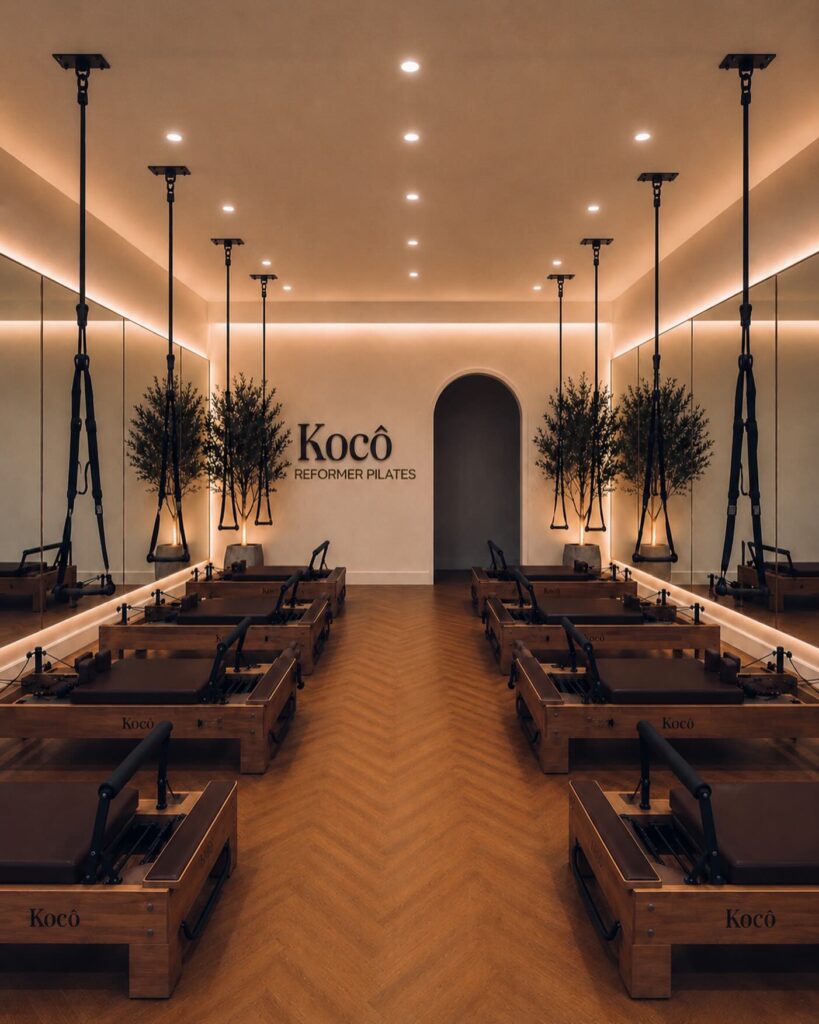
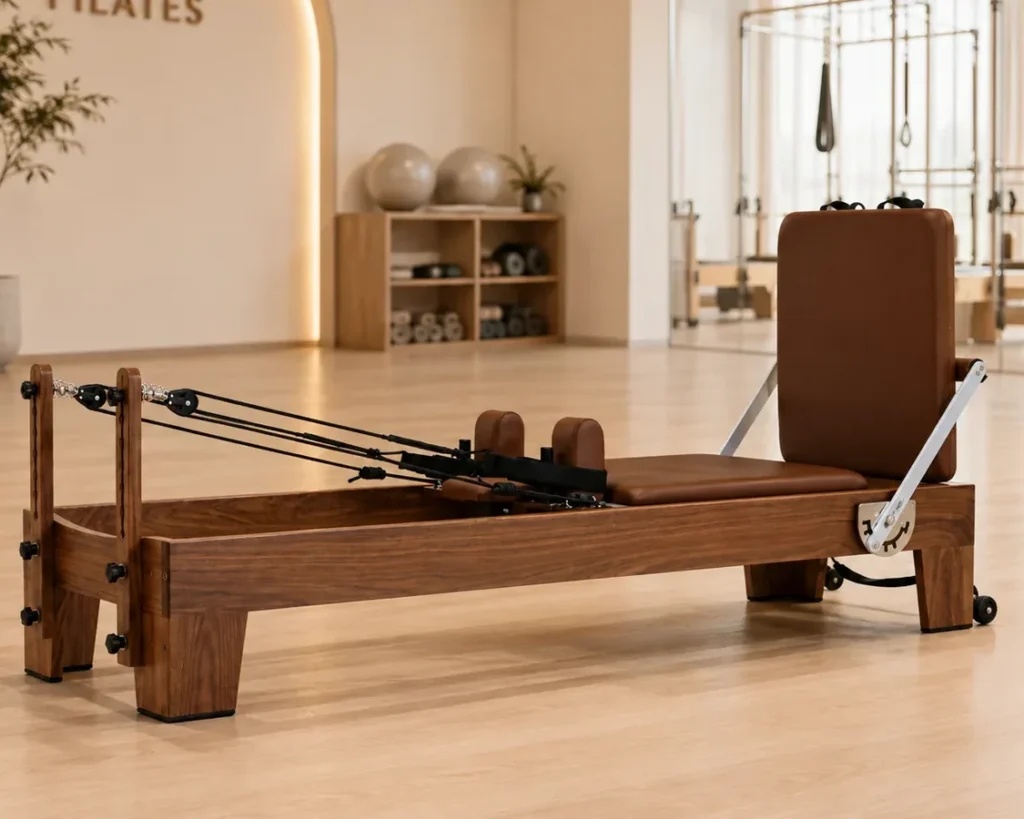
Direct Answer: Choose a walnut Pilates reformer for boutique luxury studios seeking rich dark grain and high-ticket visual positioning, white or red oak for warm Scandinavian interiors and high-impact commercial group classes, and hard maple for bright, minimalist spaces that prioritize maximum surface hardness and uniform light grain. All three hardwoods deliver full commercial-grade stability when kiln-dried and engineered with 150 kg load-rated frames and German Wagner springs.
Why Hardwood Choice Matters for Commercial Studios
When studio owners and distributors compare wooden Pilates reformers, wood species affects far more than aesthetics. Timber density, moisture stability, surface scratch resistance, and upholstery pairing directly influence how your equipment looks and performs after thousands of group classes.
Unlike budget softwoods or thin veneers that warp or chip around footbar brackets, commercial Pilates frames rely on kiln-dried solid hardwood—primarily North American black walnut, oak (white oak or red oak), hard maple, or European beech. Choosing the right species aligns your studio brand identity with long-term maintenance practicality.
Walnut vs Oak vs Maple vs Beech: Studio Comparison Table
| Wood Species | Tone & Grain Character | Commercial Hardness & Wear | Best Studio Positioning | Ideal Upholstery Pairings |
|---|---|---|---|---|
| Black Walnut | Deep chocolate brown, dramatic natural grain | High shock resistance, smooth satin patina | Luxury boutique studios, private-first clubs, hotel wellness | Cream, camel, espresso, sage green, matte black |
| Oak (White / Red) | Warm honey to golden tan, pronounced open grain | Very high dent & impact resistance; hides minor scuffs well | High-traffic group studios, coastal & warm modern interiors | Off-white, warm taupe, terracotta, olive, sand |
| Hard Maple | Bright creamy white, fine uniform closed grain | Highest surface hardness among classic Pilates woods | Minimalist, sunlit, clinical & classical studios | Stone grey, ivory, dusty rose, black, charcoal |
| European Beech | Light pinkish-blonde, subtle tight grain | Strong, economical commercial workhorse | Multi-unit group studios optimizing initial equipment budget | Grey, beige, black, custom studio brand colors |
1. Walnut Pilates Reformer: Luxury Positioning & Acoustic Warmth
A walnut Pilates reformer immediately signals a premium studio experience. Its deep brown tones photograph effortlessly under warm architectural lighting, making it the top choice for flagship boutique studios, luxury hospitality spas, and high-ticket private training rooms.
- Visual authority: Dark walnut contrasts cleanly against cream, sand, or caramel 1.0 mm microfiber leather upholstery and brushed stainless-steel hardware.
- Natural oil & lacquer finishes: Commercial matte clear coats seal the grain against sweat and studio cleaners without creating a glossy plastic look.
- Resale & brand value: Studios using walnut frames often pair them with matching Pilates Cadillacs and combo chairs to maintain a unified luxury interior.
2. Oak Pilates Reformer: High-Traffic Durability with Organic Texture
Oak is one of the most forgiving commercial hardwoods for busy group reformer rooms running 8 to 12 classes per day. Its pronounced grain pattern naturally camouflages light scuffs from shoes, straps, or jumpboards.
- White oak vs. red oak: White oak offers cooler neutral-brown undertones favored in Nordic and Mediterranean studios; red oak provides warmer amber tones at a slightly more accessible project cost.
- Dimensional stability: Properly kiln-dried oak resists seasonal humidity swings when paired with precision CNC mortise joints and steel-reinforced carriage rails.
3. Hard Maple Pilates Reformer: Classical Brightness & Surface Hardness
Hard rock maple has been the benchmark of classical Pilates apparatus for decades. With a tight, closed grain and light cream color, maple makes compact studio rooms (50–80 m²) feel noticeably brighter and more spacious.
- Superior scratch resistance: Its dense, fine-pored surface resists compression marks under heavy spring loads and footbar adjustments.
- Clean clinical aesthetic: Popular with physiotherapy clinics, classical Pilates schools, and bright minimalist studios.
What Matters More Than Wood Species: Structural Engineering
No matter whether you choose walnut, oak, or maple, commercial performance depends on what sits inside the wooden frame. Before placing a studio or wholesale order, verify these four factory specifications:
- Kiln-dried moisture control: Timber should be dried to 8%–12% moisture content before CNC milling to prevent frame twisting during ocean freight or dry winter heating.
- Load rating & carriage rails: Look for a 150 kg standard commercial user load rating and precision-aligned aluminum or stainless tracking rails for silent glide.
- Spring tension consistency: Equip every unit with calibrated German Wagner springs—see our Pilates Reformer Springs Guide for tension color coding and replacement cycles.
- Commercial upholstery: Specify 1.0 mm microfiber leather (available in 130+ colors plus slip-resistant textured finishes) over high-density rebound foam that won’t flatten after six months.
Still deciding between solid hardwood and anodized metal frames? Read our breakdown of Aluminum vs Wood Pilates Reformers or compare Commercial vs Home Pilates Reformers.
Factory-Direct Ordering & Custom Wood Finishes
At Cheer Pilates (founded 2015, 7,500 m² ISO 9001 manufacturing facility exporting to 80+ countries), you can order standard walnut, oak, maple, or beech reformers starting from 1 unit (7–10 days standard dispatch), add custom studio logos from 1 unit, or configure full OEM/ODM wood stains and upholstery from 5 units. Applicable models carry CE compliance and TÜV pre-shipment inspection assistance is available on request.
Planning a new studio buildout? Explore our Studio Solutions or request a tailored factory quote with wood & leather swatch options—our team replies within 12 hours.
Frequently Asked Questions
Is a walnut Pilates reformer as strong as maple or oak for commercial studios?
Yes. When manufactured from kiln-dried solid North American black walnut with reinforced corner joinery and precision metal rails, a walnut reformer handles the same 150 kg standard commercial load and daily group-class volume as oak or maple.
Which wood is best for humid coastal climates?
Kiln-dried white oak and hard maple with multi-layer matte marine-grade lacquer perform best in coastal humidity. Regardless of species, studios should maintain indoor relative humidity between 40% and 60% to preserve solid hardwood frames.
Can I customize upholstery colors to match walnut or oak frames?
Yes. Cheer Pilates offers 130+ colors of 1.0 mm commercial microfiber leather, including slip-resistant patterned options, plus custom studio logo embroidery or metal badges starting from 1 unit.
How should studios clean and maintain solid wood Pilates reformers?
Wipe frames weekly with a slightly damp microfiber cloth and pH-neutral wood cleaner, then dry immediately. Avoid alcohol-based or bleach sprays directly on wood lacquer, and inspect spring hooks and carriage wheels monthly.