By Tim Wu, Sales Manager, Cheer Pilates Equipment
Short answer: For aluminum vs wood Pilates reformer frames, choose aluminum if your room is humid, your machines get wiped with disinfectant many times a day, or you move them often. Choose wood (maple, oak or walnut) if the look and warmth of the room is part of what you sell and the space is dry and climate-controlled. Both can be built for commercial use. The frame material affects atmosphere, cleaning routine and upkeep more than it affects how well the reformer trains.
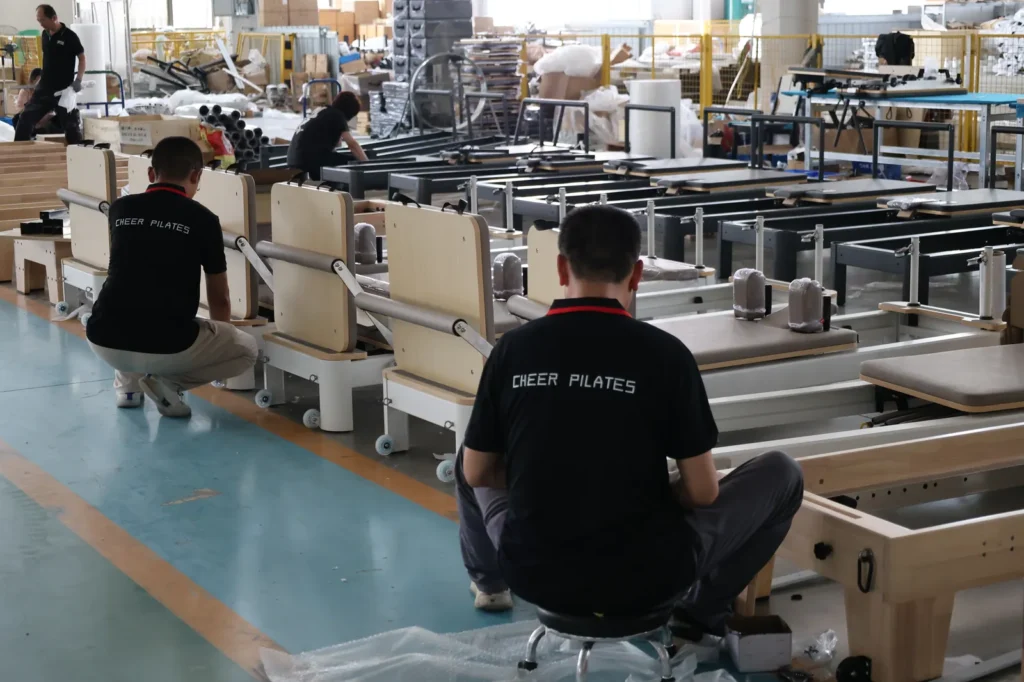
We build both aluminum and wooden reformers in our factory in Ningjin, Shandong, so we don’t need to talk you into either one. What we see is that buyers often pick the frame for the wrong reason. Some choose wood because it “feels more premium” and then install it next to a pool. Others choose aluminum because it “must be stronger” for a dry boutique room where wood would have suited the brand better.
Here’s how we’d decide, using real specs from our own range.
What doesn’t change much between aluminum and wood
Before the differences, one thing worth saying. The training experience depends mainly on the carriage, the rail, the springs, the footbar and the upholstery. The frame material changes these less than people think. A well-built wooden reformer and a well-built aluminum reformer can both feel smooth and stable. A badly built one of either material will feel bad.
So don’t choose the frame first and then accept whatever comes with it. Look at the whole machine.
Weight: closer than you’d expect
Most people assume aluminum reformers are much lighter. In our range the difference is real but smaller than people expect, because a commercial machine needs mass to stay planted.
| Model | Frame | Size (L × W × H) | Net weight | Gross weight |
|---|---|---|---|---|
| CP125 | Aluminum, full track | 238 × 82 × 38 cm | 78 kg | 120 kg |
| CP167 | Maple | 249 × 63 × 38 cm | 96 kg | 136 kg |
| CP168 | Maple | 229 × 69 × 38 cm | 92 kg | 126 kg |
| CP151 | Maple | 243 × 73 × 38.5 cm | 84 kg | 123 kg |
| CP304 | Aluminum, half tower | 244.5 × 68 × 201.5 cm | 94 kg | 136 kg |
| CP302 | Oak, half tower | 243 × 73 × 203 cm | 103 kg | 137 kg |
Specs are taken from our product pages. Check the page for your exact model before you plan delivery.
What this means: if you’ll move reformers around the room a lot, or you’re buying for a multi-use space, the lighter aluminum models help. If the machines stay in place, a few kilograms won’t decide it.
Humidity and temperature: aluminum’s strongest argument
Wood is a natural material. It reacts to moisture. Finishing and good drying reduce this a lot, but a wooden frame in a room with high humidity or big temperature swings is under more stress than an aluminum one.
Choose aluminum if:
- The studio is near a pool, spa or sauna
- The climate is tropical and the room isn’t fully air-conditioned
- Doors open to the outside often and the temperature swings
Wood is fine if:
- The room is climate-controlled
- Humidity stays moderate all year
Cleaning and disinfecting
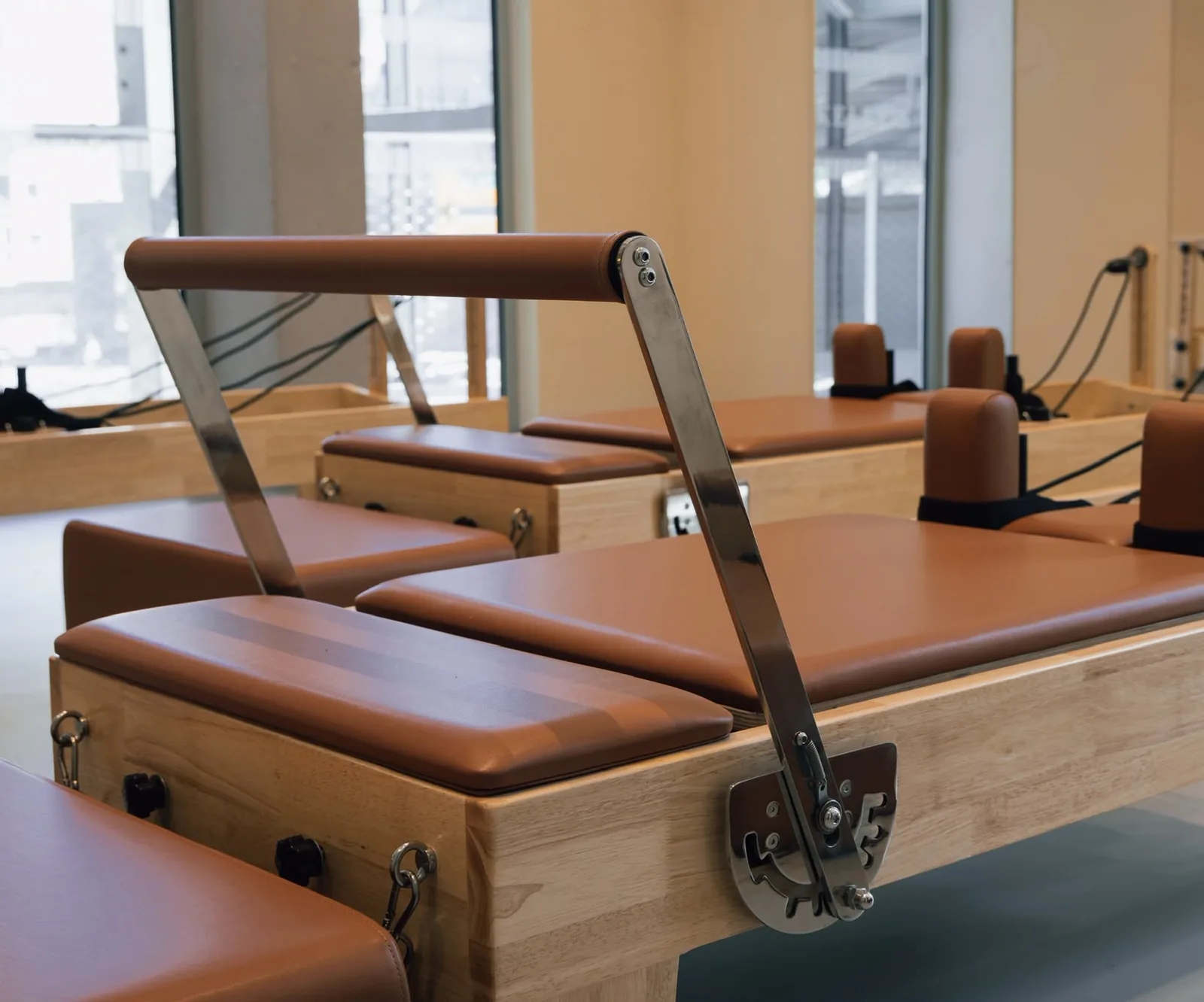
This comes up more since studios started wiping down every machine between clients. Aluminum with an anodized or powder-coated finish handles frequent wiping well. A wooden frame’s finish handles normal cleaning, but repeated harsh chemicals can wear it over time.
Our honest advice: if your clinic or studio uses strong disinfectant on the frame after every session, go with aluminum, for example our CP102 aluminum reformer with sliding footbar. If you mostly clean upholstery and wipe the frame now and then, wood is fine. For our wood finishes, we recommend a foam cleaner rather than harsh liquid chemicals.
Look and brand: wood’s strongest argument
Some studios sell a workout. Others sell an experience. Wood belongs in the second group.
A maple, oak or walnut frame makes a room feel warmer and calmer. Boutique studios, hotel spas and premium clinics often want that, and their clients notice it before they ever get on the machine. Our curved maple CP167 was designed with that kind of room in mind.
Aluminum looks clean and modern. It suits bright, minimal interiors, clinics and gyms. With a custom RAL color it can match a brand palette very closely. That’s harder with wood, although we offer finishes such as natural maple, walnut, black, white and custom stains. For a darker look, the CP162 pairs a solid red oak frame with a walnut finish.
Footprint and layout
Width decides how many machines fit in a room. Frame material doesn’t decide width, the model does. In our range, for example:
- CP167 maple: 63 cm wide
- CP124 aluminum: 69.5 cm wide
- CP125 aluminum full track: 82 cm wide
The CP108 (92 cm) and CP125 (82 cm) figures are overall widths. The extra width comes from their wide foot bar design, not from a wider carriage or frame.
If you’re trying to fit one more station into a room, compare model widths, not materials. Our studio solutions page can help with planning.
Durability and repairs
Both materials last for years in commercial use if the machine is well built and looked after. The kind of wear is different.
Aluminum frames can pick up scratches or dents from impact. Powder coating can chip if something heavy hits it. Small marks are mostly cosmetic.
Wooden frames can get dents and finish wear, especially on edges. Light marks can often be touched up. We can supply spray paint for small-area repairs.
In both cases, the parts that wear first are upholstery, ropes and springs, not the frame. Make sure spare parts are available. We supply replacement parts for our machines.
When aluminum is the wrong choice
- Your brand is built around natural materials and warmth
- The room is dry and climate-controlled, and the machines won’t move
- Your clients expect a “boutique” feel and you charge for it
When wood is the wrong choice
- High humidity, pool or spa environment
- Frequent use of strong disinfectant on the frame
- Machines that get moved, stacked or stored often
- A studio that rotates equipment between rooms
Aluminum vs wood Pilates reformer: five questions we ask first
When a studio owner asks us “aluminum or wood?”, we answer with questions first:
- What’s the room like? Humidity, air-conditioning, distance from a pool or changing room.
- How do you clean? Wipe the frame after every client, or mostly the upholstery?
- Will the machines move? Fixed stations, or cleared away for other classes?
- What does your brand look like? Natural and warm, or bright and modern?
- Who are your clients? Rehab patients, athletes, hotel guests or group-class regulars?
Three or more answers pointing the same way usually settle it. If they split, a mixed fleet is often the best answer.
A mixed fleet is fine
You don’t have to pick one material for the whole studio.
If you’re a distributor, carrying both materials lets you serve both kinds of client. Our distributor program covers both ranges.
Frequently asked questions
Is an aluminum Pilates reformer better than a wooden one?
Neither is better overall. Aluminum handles humidity, frequent disinfecting and moving better. Wood gives a warmer look that suits boutique studios. Training quality depends more on the carriage, springs and build quality than on the frame material.
Are aluminum reformers much lighter than wooden reformers?
Somewhat. In our range, the CP125 aluminum reformer is 78 kg net and the CP167 maple reformer is 96 kg net. Commercial machines need weight to stay stable, so the gap is smaller than many buyers expect.
Can wooden reformers be used in humid climates?
They can be used where the room is air-conditioned and humidity is controlled. Near pools, spas or in non-air-conditioned tropical rooms, we recommend aluminum.
Which wood is best for a Pilates reformer?
We build in maple, oak and walnut. Maple gives a light, clean look. Oak shows a stronger grain. Walnut is darker and richer. All three are used for commercial machines. The choice is mostly about style.
Can I get an aluminum reformer in my brand color?
Yes. We offer custom RAL frame colors, and logo customization is available from 1 unit.
See both in one quote
If you’re still weighing aluminum vs wood Pilates reformer frames, ask us to quote one aluminum and one wooden model for the same room. We’ll include sizes, weights and packing data so you can compare properly.
Browse aluminum reformers and wooden reformers, or read our reformer buying guide.
Tim Wu is Sales Manager at Cheer Pilates Equipment and has worked in the fitness and Pilates equipment industry for 10 years. He handles export projects for studios, distributors and private-label brands, and you can reach him directly on +86 177 5347 9797.