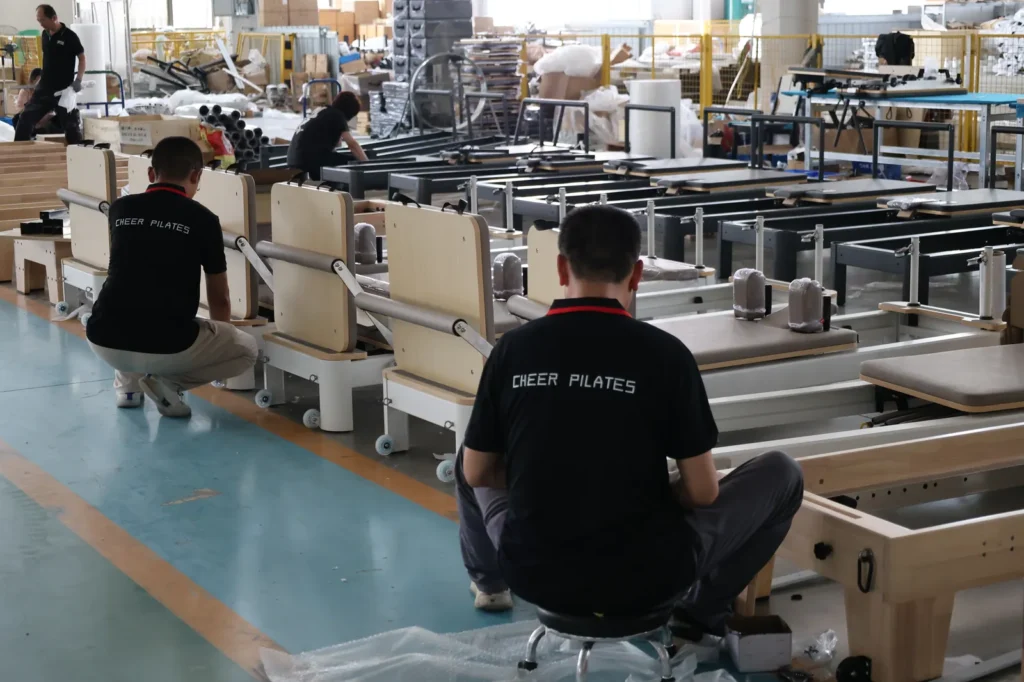
By Tim Wu, Sales Manager, Cheer Pilates Equipment
Short answer: When importing Pilates reformers from China, the shipping term decides who pays for what. With DDP, we deliver to your door with import duties and taxes paid, so it’s the simplest option for first-time importers. With FOB, we load the goods onto the ship in China and you take over freight, insurance and import from there. CFR and CIF sit in between: we pay sea freight to your port (and with CIF, the cargo insurance too), but you handle import clearance, duties and the last mile. EXW is the other extreme: your forwarder collects from our factory and handles everything after that. Pick DDP if you want one price and no paperwork. Pick FOB or EXW if you already have a forwarder you trust.
Every week we get the same question in slightly different words: “What’s the total cost to get these to my studio?” The honest answer depends on the shipping term you choose. A quote that looks cheap on FOB can end up costing more than a DDP quote, once you add freight, insurance, a customs broker and a truck from the port.
We offer five terms: EXW, FOB, CFR, CIF and DDP. They are Incoterms rules, published by the International Chamber of Commerce. This guide shows where the cost and the risk sit under each one, and which one we usually recommend to different kinds of buyers. Most of our buyers end up on DDP, FOB or CFR, so we spend the most time on those.
Why the shipping term matters when importing Pilates reformers from China
A Pilates reformer is big and heavy. Our CP310 aluminum reformer with half tower ships in a carton of 2650 × 770 × 570 mm, about 1.16 CBM, at 160 kg gross. Our CP167 maple reformer is 136 kg gross. You can’t put that in a courier van, and nobody is carrying it up the stairs alone.
So freight is a real part of your landed cost, and so is the last mile. Your term decides who arranges each piece and who pays for it.
DDP: Delivered Duty Paid
Under DDP, we organize everything from our factory to the address you give us. That includes export clearance in China, sea or air freight, import clearance in your country, import duties and taxes, and delivery to your door.
Who DDP suits
- First-time importers who don’t have a freight forwarder
- Studios ordering for their own use rather than for resale
- Buyers who want one number to put in a budget
What to watch with DDP
DDP is only as good as the logistics partner behind it, so ask your supplier which countries they regularly ship DDP to. Also check what “door” means. Delivery to a ground-floor loading area is not the same as carrying cartons up to a third-floor studio. Agree on this before you order.
With our DDP quotes, the price covers delivery to your address. Unloading at the door is on your side, and cargo insurance is not included in DDP. You can buy it separately. We can ship DDP to many markets and confirm it for each destination. Send us your full delivery address and we’ll check it before we quote.
FOB: Free on Board
Under FOB, we deliver the goods to the port in China, clear them for export and load them onto the vessel your forwarder has booked. From that moment, the freight, insurance, import clearance, duties and delivery are yours.
Who FOB suits
- Distributors who already import from China and have a forwarder
- Buyers consolidating our cartons with goods from other suppliers
- Larger orders where you want control over shipping lines and timing
What to watch with FOB
You need to name the port. Ask your supplier which Chinese port they normally load from and how the cartons get there. Our FOB quotes are FOB Tianjin port.
Your forwarder also needs the right numbers to book space: carton sizes, gross weights and CBM. We list these on most product pages. For example, our CP125 full-track aluminum reformer packs into 247 × 84 × 62 cm at 120 kg gross. Make sure your forwarder gets the packing list, not just the product list.
EXW: Ex Works
Under EXW, the goods are ready for collection at our factory and your forwarder takes over from there: pickup, export clearance in China, freight, insurance, import and delivery. It gives you the most control and puts the most work on your side.
Who EXW suits
- Buyers with an experienced forwarder in China who already collects from several suppliers
- Distributors who want to manage the whole chain themselves
What to watch with EXW
Make sure your forwarder can handle export clearance in China, because under EXW that is your side’s job. For heavy reformer cartons, also agree in advance who loads the truck at our factory. In practice, many buyers who think they want EXW are better served by FOB, where we take care of export clearance and delivery to the port.
CFR: Cost and Freight
Under CFR, we pay the sea freight to your destination port. Risk passes to you once the goods are loaded on the vessel in China, even though we’ve paid for the voyage. You handle insurance, import clearance, duties, port charges at destination and delivery from the port.
Who CFR suits
- Buyers who have a customs broker at home but no forwarder in China
- People who want us to book the ocean freight but prefer to manage the import side themselves
What to watch with CFR
The point that confuses people: under CFR, you carry the risk at sea even though we booked the ship. So arrange cargo insurance yourself. Also budget for destination charges at your port. These are often a surprise on a first CFR shipment.
CIF: Cost, Insurance and Freight
CIF works like CFR, with one difference: we also buy cargo insurance for the sea leg to your destination port. Risk still passes to you once the goods are on board in China, but if something happens at sea, there is a policy to claim against. Under CIF the seller’s obligation is minimum cover, so if you want broader cover, say so when you ask for the quote.
CIF suits the same buyers as CFR, especially those who don’t want to arrange insurance themselves.
Side-by-side: who does what
| Step | EXW | FOB | CFR | CIF | DDP |
|---|---|---|---|---|---|
| Export clearance in China | You do | We do | We do | We do | We do |
| Loading at Chinese port | You do | We do | We do | We do | We do |
| Ocean freight | You pay | You pay | We pay | We pay | We pay |
| Cargo insurance | You arrange | You arrange | You arrange | We arrange | Not included, buy separately |
| Import clearance | You do | You do | You do | You do | We do |
| Import duties and taxes | You pay | You pay | You pay | You pay | We pay |
| Destination port charges | You pay | You pay | You pay | You pay | We pay |
| Delivery to your door | You do | You do | You do | You do | We do |
| Where risk passes to you | At our factory | On board in China | On board in China | On board in China | At your door |
What actually goes into your landed cost
We don’t publish prices on our site, because the right price depends on configuration and order size. But we can tell you what makes up the total when a reformer arrives in your studio:
- The machine itself, which depends on model, frame, springs, upholstery and accessories
- Customization, such as logo, frame color and packaging
- Freight, driven mostly by CBM and weight, not by the number of machines
- Insurance
- Import duty and tax, set by your country’s customs and the product classification. We don’t quote HS codes or duty rates. Ask a local customs broker
- Destination charges, such as port handling and documentation
- Last-mile delivery, which is often by tail-lift truck because of the weight
When you compare quotes from different suppliers, put them on the same term. An EXW or FOB quote and a DDP quote aren’t comparable until you add items 3 to 7 to the EXW or FOB one.
Timing: production plus transport
There are two clocks. Production time at the factory comes first, then transport. On our CP101A product page we give typical transport times of 25–45 days by sea to the destination port and 7–15 days by air, depending on your location. Air makes sense for a single urgent sample. For a full studio, sea freight is the normal choice.
Production for standard models takes about 30 days after we receive the deposit. OEM orders take about 20–45 days, depending on the project. Adding a logo to a standard model adds about 7–15 days.
Documents you should expect from your supplier
Whatever the term, a proper export comes with paperwork. Ask for:
- Commercial invoice
- Packing list with carton sizes, weights and CBM
- Bill of lading (sea) or air waybill (air)
- Any certificates your customs or your customers need, for example CE documents
Our products are CE certified and our factory is ISO certified. If your customs broker asks for something specific, tell us early so we can prepare it before the goods leave.
Our recommendation by buyer type
A studio buying for itself, first time importing: DDP. You get one price and one contact. The small premium is usually worth it.
A distributor with an existing China forwarder: FOB. You already pay for that service, so use it.
A buyer with a good customs broker at home but no China contacts: CFR or CIF. Choose CIF if you’d rather we arranged the cargo insurance.
A buyer whose forwarder already collects from factories in China: EXW is possible, though FOB is usually easier.
Unsure? Ask us for a quote on two terms side by side. We’d rather you choose with the numbers in front of you.
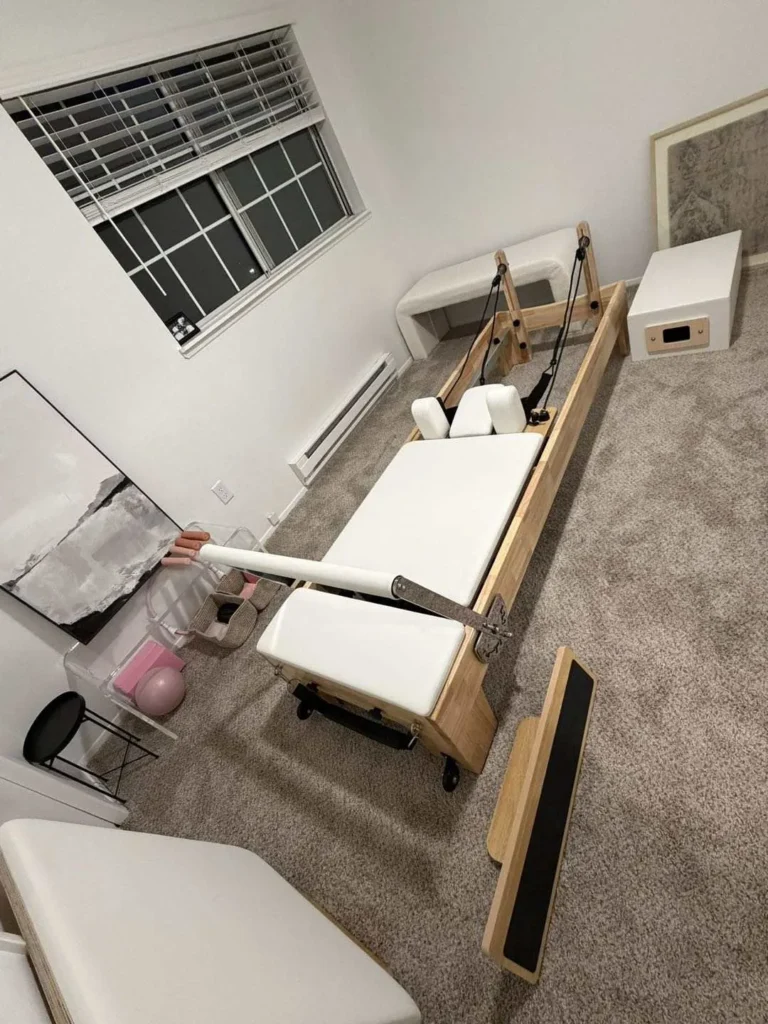
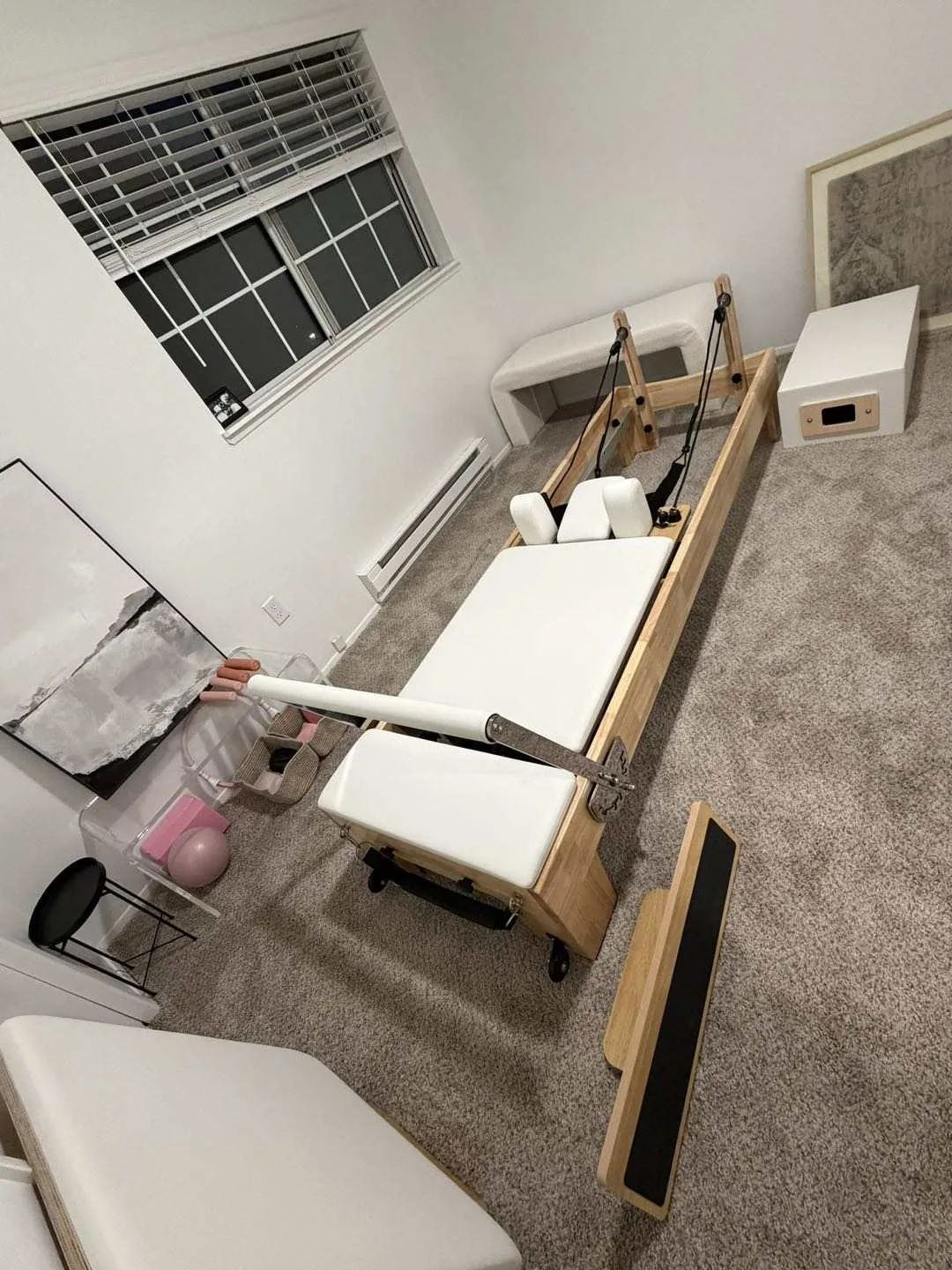
Here’s what a door-delivered order looks like in practice. A customer in California ordered one CP152 oak reformer for a small private studio. When the shipment reached the port in California, the customs clearance and import tax were handled there, and a truck took the machine to the customer’s address. Their message after it arrived: “I received the reformer and it is perfect.”
Paying for your order
We accept credit card and PayPal, alongside bank transfer. Card and PayPal are handy for samples and small first orders. Our usual terms are a 30% deposit to start production, then the 70% balance before shipment. We send photos of the finished machines before you pay the balance.
Frequently asked questions
What does DDP mean when buying Pilates equipment from China?
Delivered Duty Paid. The seller delivers to your address with export, freight, import clearance, duties and taxes included. You receive the goods and don’t deal with customs yourself.
Is FOB or DDP cheaper?
FOB quotes look lower because they stop at the Chinese port. Once you add freight, insurance, duties, port charges and delivery, DDP can come out similar or even cheaper for small orders. Compare landed cost, not the quote line.
Who pays import duties under CFR or CIF?
You do. Under CFR the seller pays ocean freight to your port, and under CIF the seller also pays cargo insurance. Import clearance, duties, taxes and onward delivery are the buyer’s responsibility.
Which trade terms does Cheer Pilates Equipment offer?
EXW, FOB, CFR, CIF and DDP. Tell us your destination and we can quote more than one so you can compare.
How heavy is a Pilates reformer for shipping?
It depends on the model. For example, our CP167 maple reformer is 136 kg gross and our CP310 aluminum reformer with half tower is 160 kg gross. Exact figures are on each product page.
How long does sea freight from China take?
Usually around 25–45 days by sea to the destination port and 7–15 days by air, depending on destination. Production time comes on top of that: about 30 days after deposit for standard models.
Can I order just one reformer and import it?
Yes. Our standard models start from 1 unit. For a single unit, DDP or air freight is often the least stressful option.
Get a quote on the term that suits you
Importing Pilates reformers from China gets easier once the term is clear. Tell us your destination address or port, the models and quantities, and which term you’re considering. If you’re not sure, ask for two. We’ll give you both so you can compare. Our sales team is online 24/7, so you can send your details whenever suits you.
Related reading: our FAQ on orders and shipping, the distributor program, and the Pilates reformer buying guide.
Tim Wu is Sales Manager at Cheer Pilates Equipment and has worked in the fitness and Pilates equipment industry for 10 years. He handles export projects for studios, distributors and private-label brands, and you can reach him directly on +86 177 5347 9797.