Wipe upholstery and check springs and ropes daily, inspect wheels, rails and fasteners weekly, do a full service monthly, and replace springs on a fixed schedule — commonly about every two years, sooner in group-class use. Keep spare springs and ropes on hand and a log per machine.
This page is an on-site checklist. Cheer does not publish a downloadable maintenance manual or PDF.
Pilates reformer maintenance at a glance
Use this table as the printable checklist for a busy reformer room. Assign each row to a role so nothing sits between “someone should check that” and an out-of-service machine mid-class.
| Task | Frequency | Who | What to look for | Take out of service if… |
|---|---|---|---|---|
| Upholstery wipe-down | Daily (after classes / end of day) | Instructor or cleaner | Sweat, lotion, grit on carriage and shoulder rests | Tears, open seams or sticky residue that won’t wipe off |
| Spring visual check | Daily before first class | Instructor | Gaps between coils, kinks, bends, rust, slow return | Any damaged or rusted spring |
| Rope / strap check | Daily | Instructor | Fraying, flat spots, loose stitching, rope lock engagement | Frayed core, broken stitch or lock that won’t hold |
| Carriage roll test | Daily | Instructor | Smooth, quiet travel; no grinding or knock | Grinding, catching or uneven roll |
| Rail clean | Weekly | Manager / technician | Dust, hair, chalk on rails | Deep scratches that catch wheels |
| Wheels and fasteners | Weekly | Manager / technician | Flat spots on wheels; loose bolts on footbar, headrest, shoulder blocks | Deformed wheels or fasteners that won’t stay torqued |
| Footbar and headrest adjusters | Weekly | Manager | Positive lock at each setting; no slip under load | Slip under client weight |
| Full service + log | Monthly | Manager / technician | All of the above plus spare-parts stock and date stamps | Any unresolved daily/weekly fail |
Springs: inspection and replacement
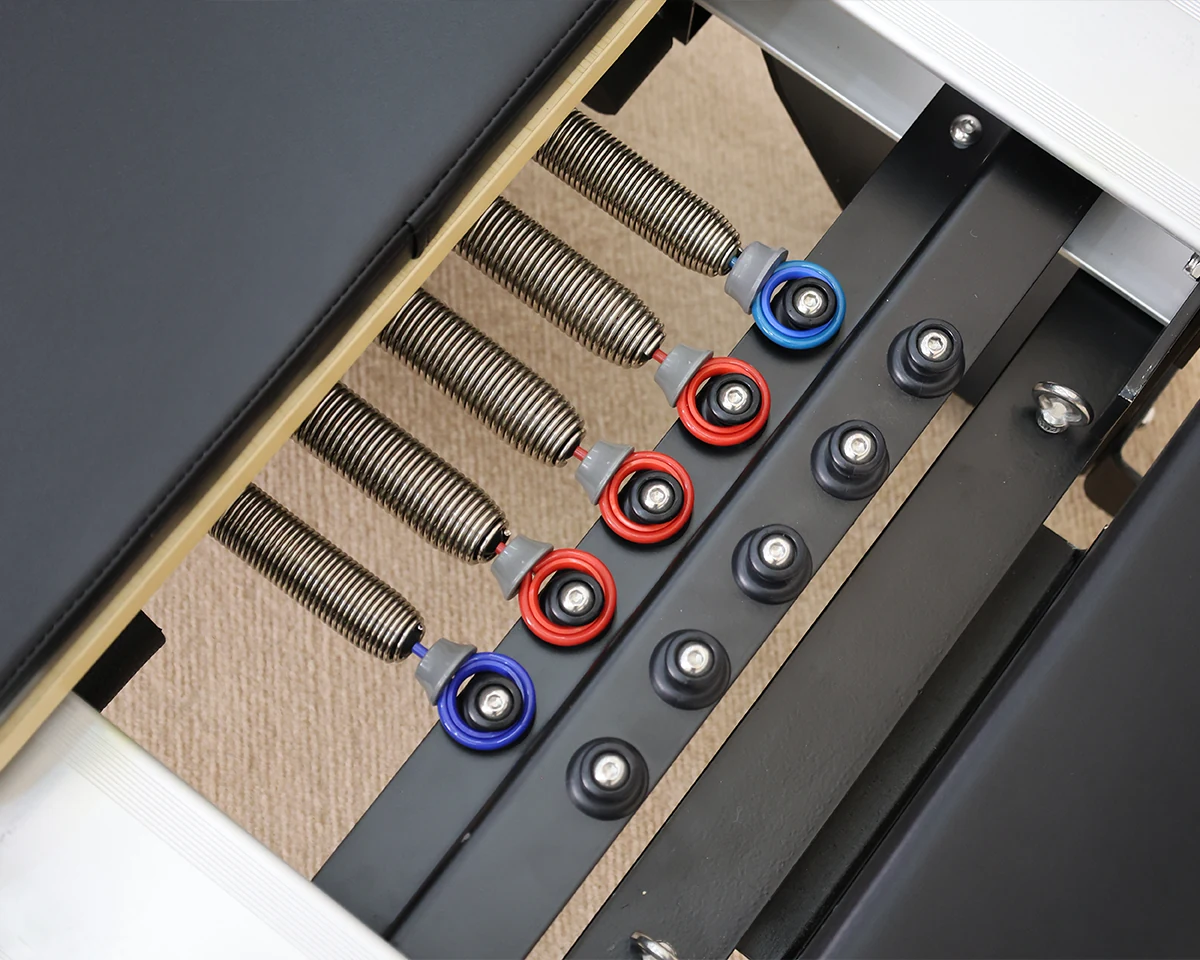
Springs are the part studio buyers worry about most when they source from a factory. A tired spring shows gaps between coils, kinks, bends, rust or a slower return than its neighbours. Replace any spring that shows those signs immediately.
Reformer springs are commonly replaced on a fixed schedule — roughly every two years, and sooner under heavy group-class use — and immediately if a spring shows gaps between coils, kinks, bends or rust. That is general industry practice, not a Cheer life rating. We do not publish a Cheer spring-life figure in cycles or years.
You can swap one damaged spring right away for safety. We don’t recommend running a reformer long-term with one new spring next to old ones, because the new spring will feel stronger at the same setting. Plan a full-set change per machine on a fixed schedule, and write the date on the machine log.
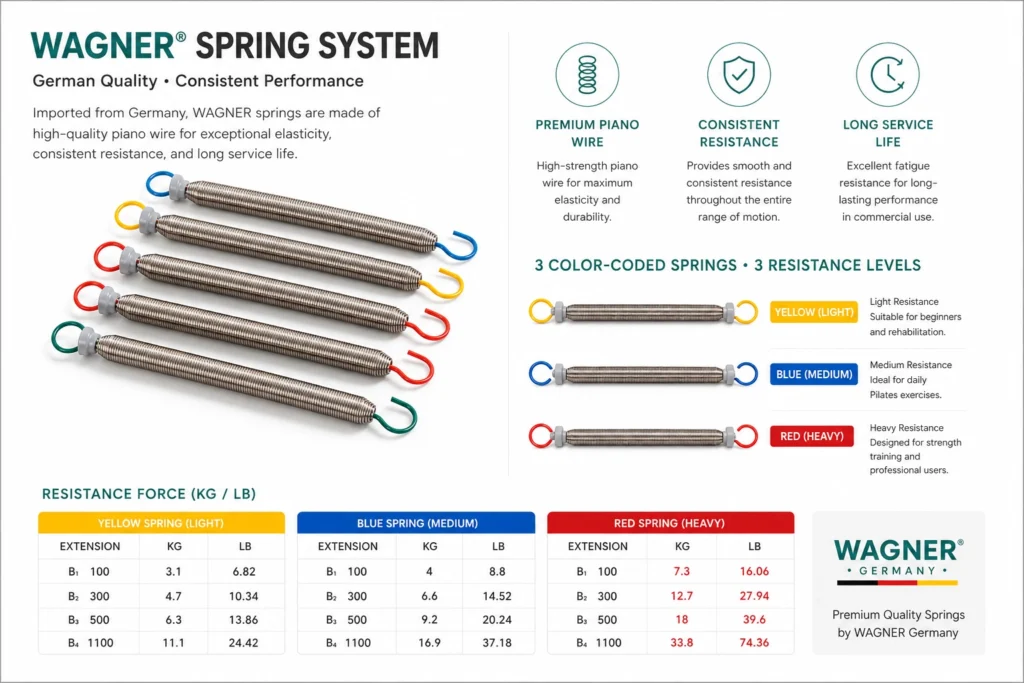
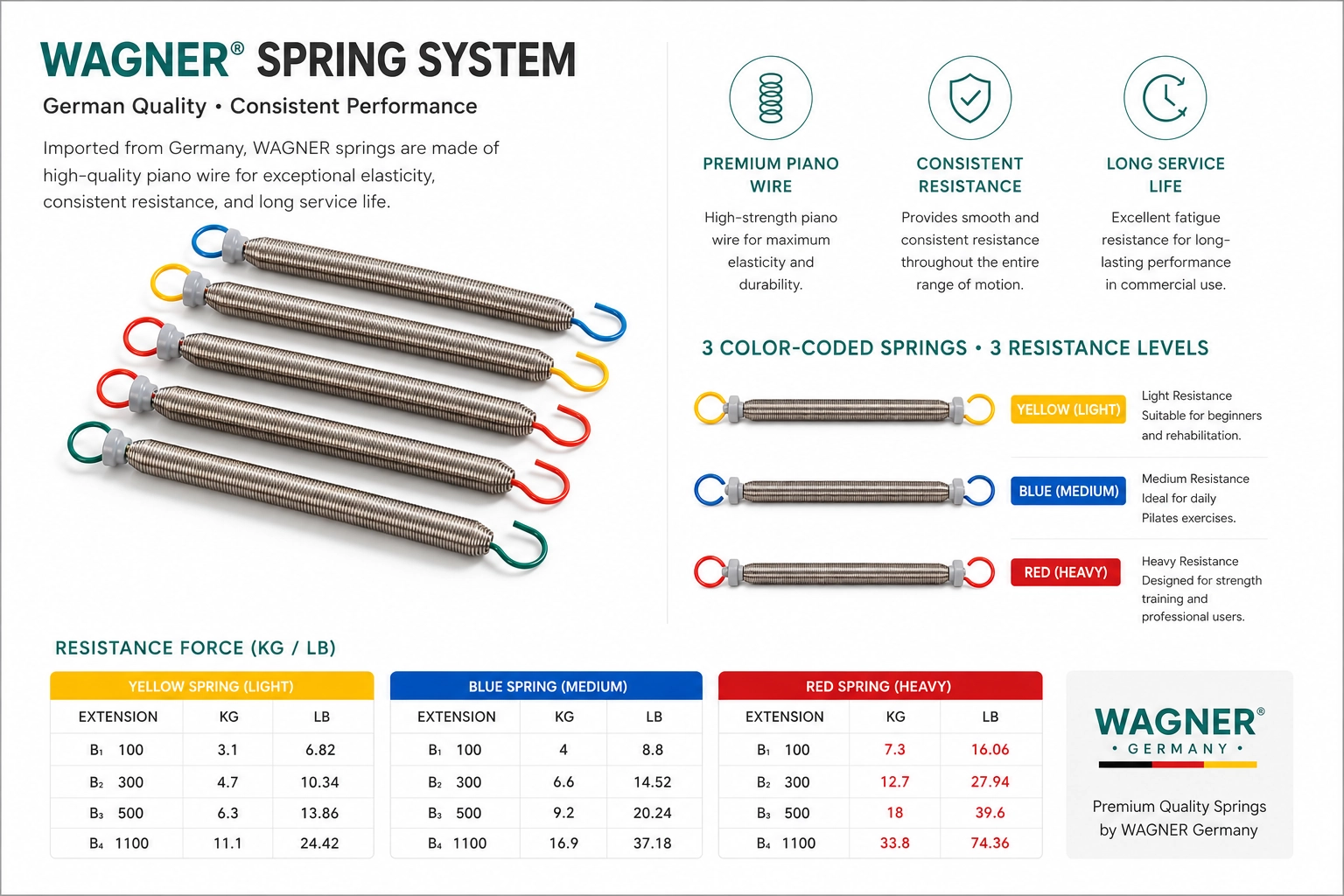
Every Cheer reformer uses German Wagner springs. Cheer sells replacement springs separately — give the reformer model number when you order. Factory tip we repeat to every new studio: wipe sweat off the springs quickly after classes. Sweat left on coils is what starts surface rust in humid rooms.
Ropes, straps and pulleys
Ropes and straps fail more often than frames. Look for fraying near the clips, flat spots where the rope runs over a pulley, and stitching that has opened at the loops. If the rope lock does not hold under a firm pull, take the machine out of service.
Keep at least one spare rope set per reformer model on site. Cheer sells ropes and straps as spare parts separately from the machine, and spare parts ship within 3 days. Quote the model number so the loop length and hardware match.
Wheels, rails and the carriage
Noise is usually the early warning. Dust and hair on the rails make wheels chatter; a quiet roll test at the start of the day catches that before clients hear it. Clean rails with a damp cloth. We don’t recommend spraying oil onto rails unless a written care note for that frame says so — oil holds dust and turns into grit.
Frame material matters for care. Aluminum, wood and steel frames shed dust differently and take different cleaners on the structure (not on the upholstery). Compare builds in our aluminum vs wood reformer guide; CP223, for example, is a steel reformer and is maintained like other steel frames.
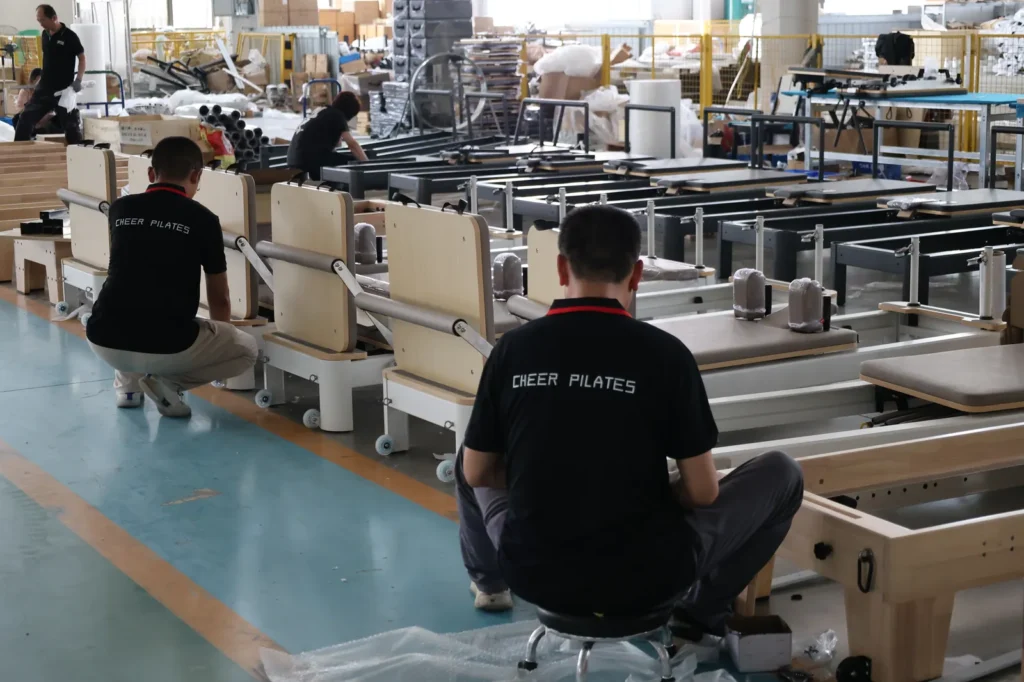
Factory tip for seasonal studios, stored stock and distributor showrooms: don’t leave a reformer unused for long periods. Wheels can deform under long static load. Roll every stored machine weekly, or put the carriage on a short travel cycle so the wheels don’t sit on the same spot for months.
How to clean a Pilates reformer
Upholstery first: never clean the leather or upholstery with alcohol or water. That is the factory’s first rule. Harsh solvents, abrasive pads and oils also dry out and crack the surface. Use a soft cloth — dry, or with a cleaner suited to the upholstery material. We don’t publish a branded cleaning-agent list; ask for care notes with your order if your local rules require a named product.
We don’t recommend spraying disinfectant directly onto springs or rails. Spray the cloth instead. Wipe sweat off springs quickly after each class. Keep liquids away from the spring hooks and the underside of the carriage.
What to ask your supplier before you order (after-sales checklist)
Buyer forums keep raising the same worry about reformers sourced from China: spring quality and spare-parts support. Settle these points in writing before you place the order — with Cheer or with any other factory:
- Parts list with model numbers (springs, ropes, upholstery, wheels)
- Spring type used on the reformers you are buying
- Whether spare springs, ropes and upholstery are sold separately
- How fast spare parts ship, and who pays shipping on in-warranty replacements
- Warranty length on frame and wear parts
- Reply time for after-sales questions
- Installation and care instructions (on-page guides or PDF)
Cheer’s answers: German Wagner springs on every reformer; springs, ropes and upholstery sold separately as spare parts; spare parts ship within 3 days; warranty is 1 year; Cheer pays shipping for in-warranty replacement parts; we reply within 12 hours. Cheer products are CE certified. Get the same points in writing from any supplier you compare. For a broader factory check, use our 7-step manufacturer checklist.
Accessories that change how hard a reformer works — jump boards, boxes, straps — are covered in the reformer accessories guide. Springs as a cost driver (not a care routine) are covered in commercial reformer cost factors.
How long does a commercial reformer last?
We don’t publish a single lifespan number. Frames and wear parts age differently. A well-kept aluminum, wood or steel frame can outlast several sets of springs, ropes and upholstery. A maintenance log extends useful life because you replace wear parts on schedule instead of running them to failure in front of clients.
Replace the machine when the frame is bent, the rails are deeply scored, or repair parts cost more than a planned refresh of the room. Until then, keep commercial Pilates reformers on the checklist above.
FAQ
How often should Pilates reformer springs be replaced?
Common industry practice is to replace reformer springs on a fixed schedule, roughly every two years, and sooner in busy group-class studios or humid rooms. Replace any spring at once if you see gaps between coils, kinks, bends or rust. Every Cheer reformer uses German Wagner springs, and Cheer sells replacement springs separately: quote your model number when you order.
What should a studio check on its reformers every day?
Before the first class, wipe the upholstery and check every spring for gaps, kinks and rust. Make sure ropes and straps are attached and the rope lock is engaged. Roll the carriage once and listen: a smooth, quiet ride is normal, while grinding or knocking means the wheels and rails need attention. Take any reformer out of service if a spring or rope looks damaged.
Can I replace just one spring, or the whole set?
You can replace one damaged spring right away for safety. We don’t recommend running a reformer long-term with one new spring next to old ones, though, because the new spring will feel stronger at the same setting. Plan a full-set change per machine on a fixed schedule, and log the date on each reformer.
How do you clean reformer upholstery without damaging it?
Use a soft cloth and never alcohol or water on the leather or upholstery — that is the factory’s first rule. Harsh solvents, abrasive pads and oils also dry out and crack the surface. Wipe sweat off the springs quickly after each class. Don’t spray disinfectant onto springs, rails or wheels. Spray the cloth instead.
Can I buy replacement springs, ropes and upholstery for Cheer reformers?
Yes. Cheer sells springs, ropes and upholstery separately as spare parts. Quote the model number; spare parts ship within 3 days. Warranty in our blogs is 1 year, and Cheer pays shipping on in-warranty replacement parts. We reply within 12 hours.
Need spare springs or a parts list for your Cheer reformers? Send the model numbers — we reply within 12 hours. Get a custom quote or contact Cheer Pilates.
About the author. Tim Wu has ten years of personal experience in the Pilates equipment industry. He works with Cheer Pilates (founded 2015), which manufactures commercial reformers and studio equipment for buyers in 80+ countries.