
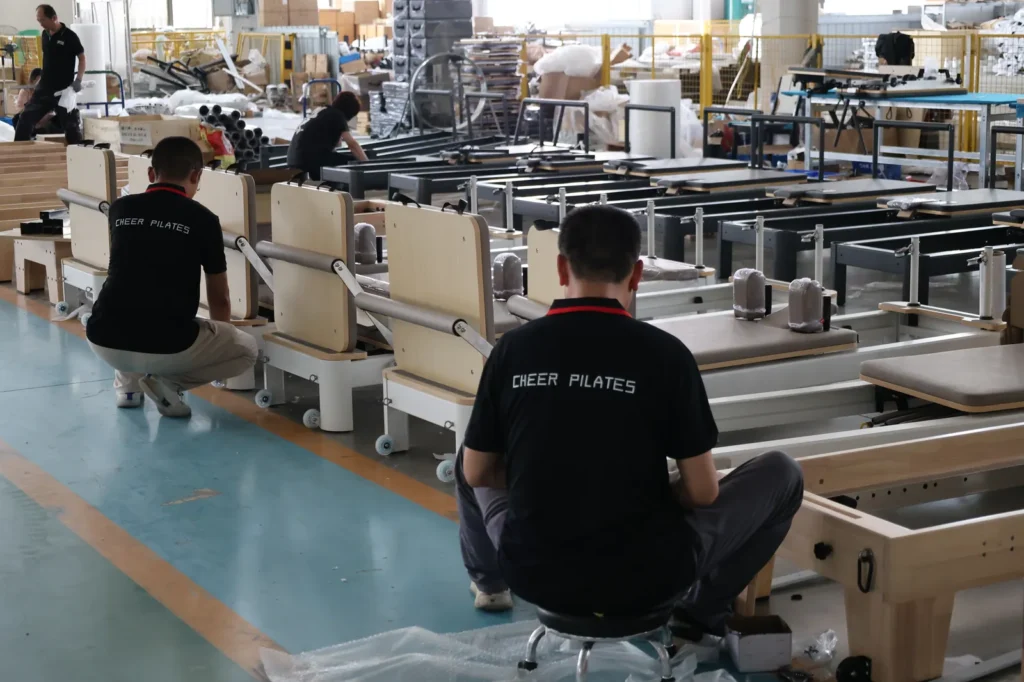
Short answer: start small and stay in control. Pick two or three reformer models, order one sample, check the factory’s documents, then choose a shipping term you can actually manage. At Cheer the MOQ is one unit (five for OEM under your own brand), standard models ship in 7–10 days, and you can mix models in one order.
I have spent the last ten years on the factory side of these conversations. The importers who do well on their first container are rarely the ones with the biggest budget. They are the ones who treat order number one as a test: one sample, a short list of models, paperwork checked before the deposit, and a shipping term they understand. This guide walks through that order of work, with our real numbers where they help.
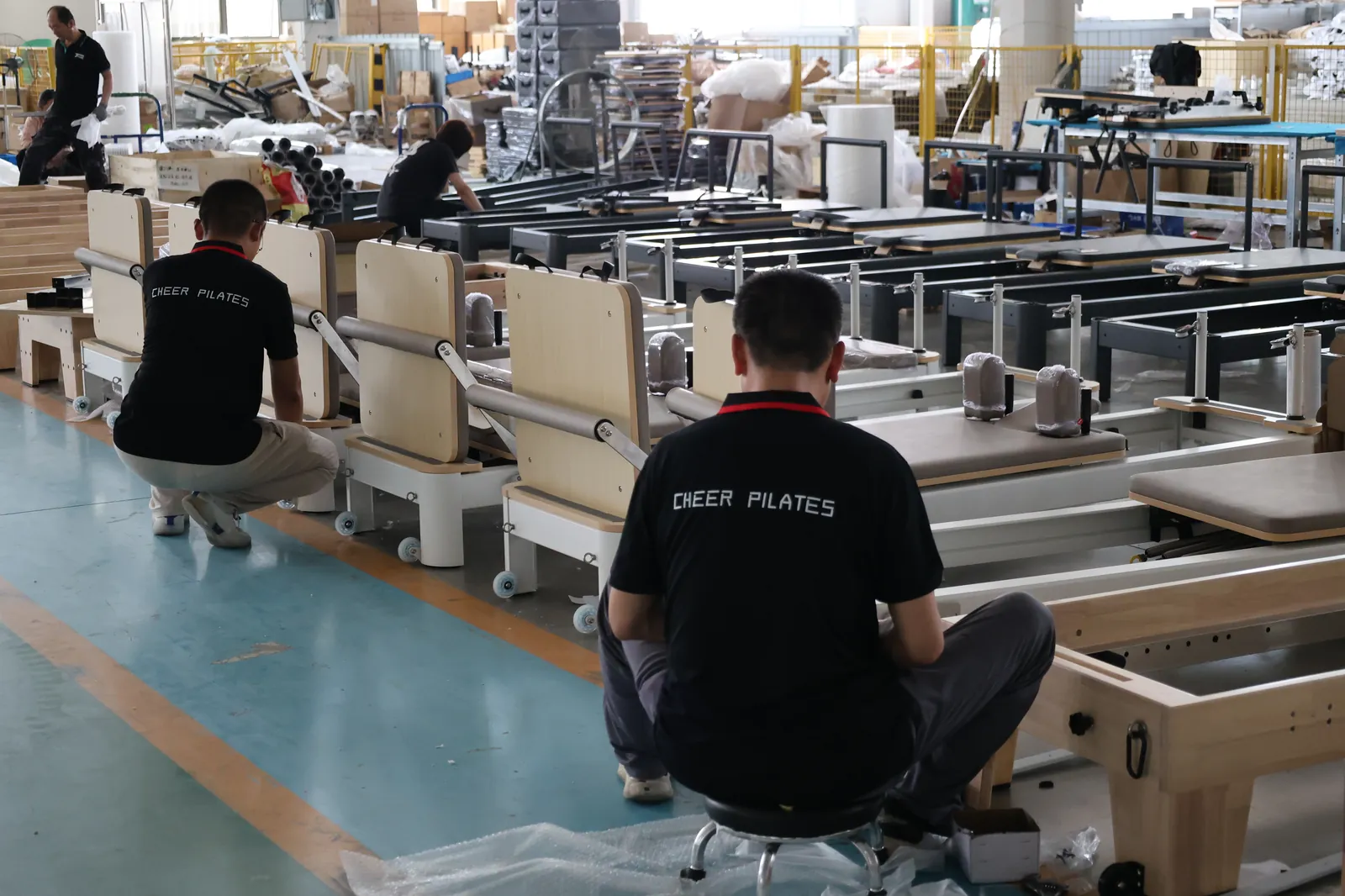
First import at Cheer: the numbers in one place
Before the steps, here is what a first order with us looks like on paper. Prices and freight depend on the models and the destination, so they are quoted per order and not listed here.
| Item | What to expect |
|---|---|
| Minimum order (standard models) | 1 unit |
| Minimum order (OEM, your brand) | 5 units |
| Logo on a single sample | Yes |
| Mixed models in one order | Yes |
| Production, standard models | 7–10 days |
| Production, logo or OEM | Confirmed per order (depends on models and quantity) |
| Payment | 30% deposit, 70% balance; card and PayPal accepted |
| Shipping terms | EXW, FOB Tianjin, CFR, CIF, DDP |
| Transit time | Sea 25–45 days, air 7–15 days |
| Warranty | 1-year warranty on the whole machine |
| Warranty spare parts | Shipped within 3 days, shipping paid by us |
Step 1: Decide what you will sell before you contact a factory
This sounds obvious. It is also where most first enquiries go sideways. A buyer asks for “your full catalogue and best price”, receives 100+ models, and stalls for three months.
Answer two questions first. Will you sell reformers only, or a full studio range with Cadillacs, chairs and barrels? And will you sell stock models under the factory’s design, or put your own brand on them?
- Reformers only: the easiest start. One aluminum model and one wooden model cover most studio requests.
- Full studio range: better margins per customer, but more SKUs to explain, stock and service.
- Stock models: no tooling, shortest lead time, MOQ of one.
- Your own brand: OEM from five units, logo and color choices, and more control over how you look in your market.
If you plan to resell to studios rather than open one, read our guide to selling Pilates equipment as a distributor before you build a price list. My honest advice: start with two or three models you can explain well. You can always add the Cadillac later.
Step 2: Order a sample first (MOQ 1, OEM from 5)
Our minimum order is one unit, and we can put your logo on that single sample. For a full OEM order under your own brand, the minimum is five units. You can also mix models in one order, for example one aluminum reformer, one wooden reformer and a Wunda chair in the same shipment.
When the sample arrives, test it the way a busy studio will use it, not the way a showroom does:
- Run the carriage end to end 50 times. It should glide evenly, with no catch or wobble at the ends.
- Hook and unhook every spring. Our spring-loaded models use German Wagner springs; check that each colour gives a clear step in resistance.
- Sit, kneel and stand on the carriage. Our frames are rated for users up to 150 kg.
- Check upholstery seams, edges and stitching under bright light.
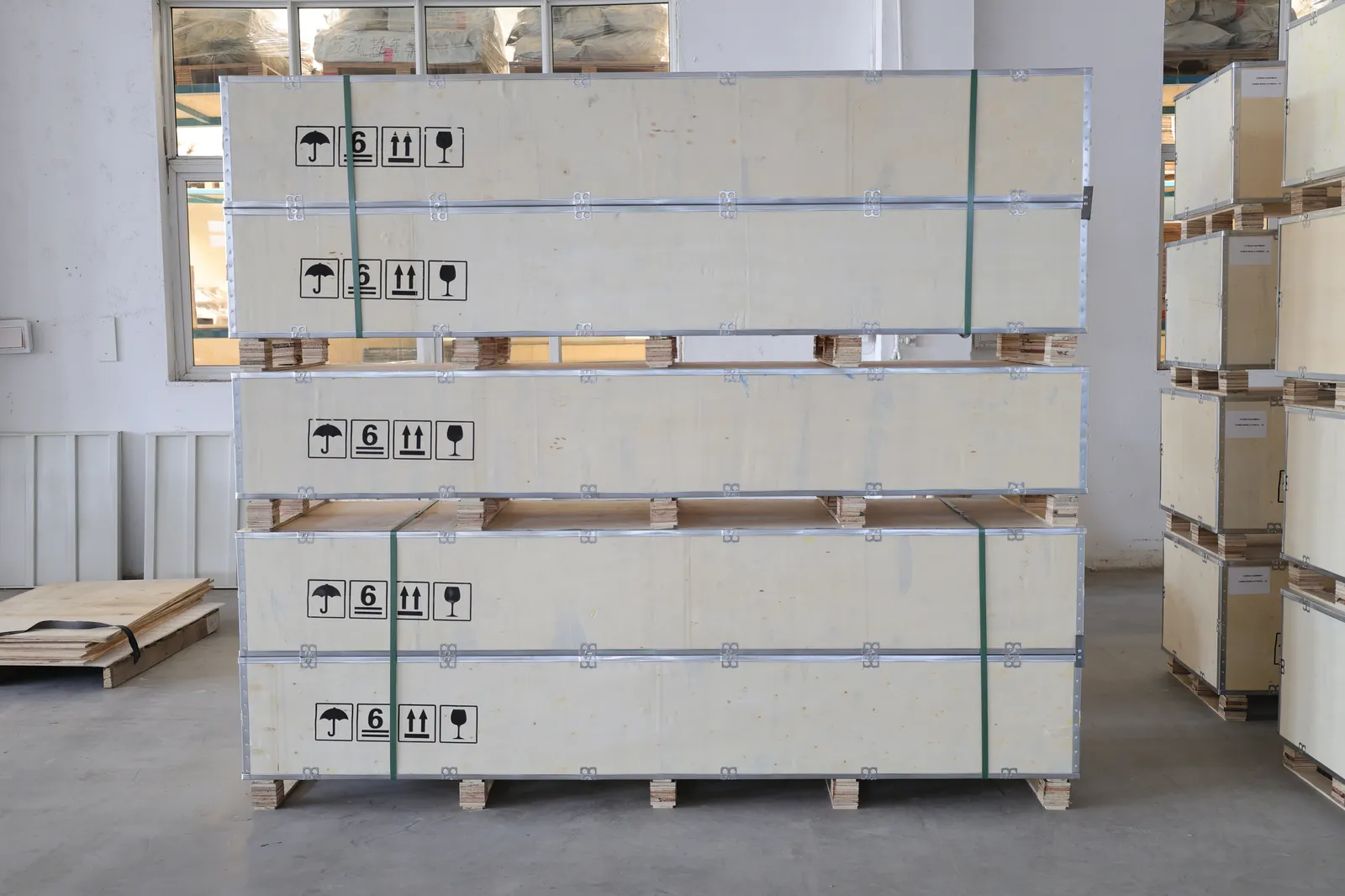
- Open the packing slowly and photograph it. Your future customers will receive the same crate.
- Write down every change you want, then approve the sample in writing so production matches what you tested.
We do not recommend ordering 20 units of a model nobody on your team has used. One sample costs you a few weeks. A wrong container costs you a season.
Thinking about your own brand? Our page on OEM and private-label reformers covers logo methods (UV printing, laser, silk-screen, embroidery and metal plates), colours and packing. Custom products made for a distributor are not sold to anyone else.
Step 3: The documents to ask for
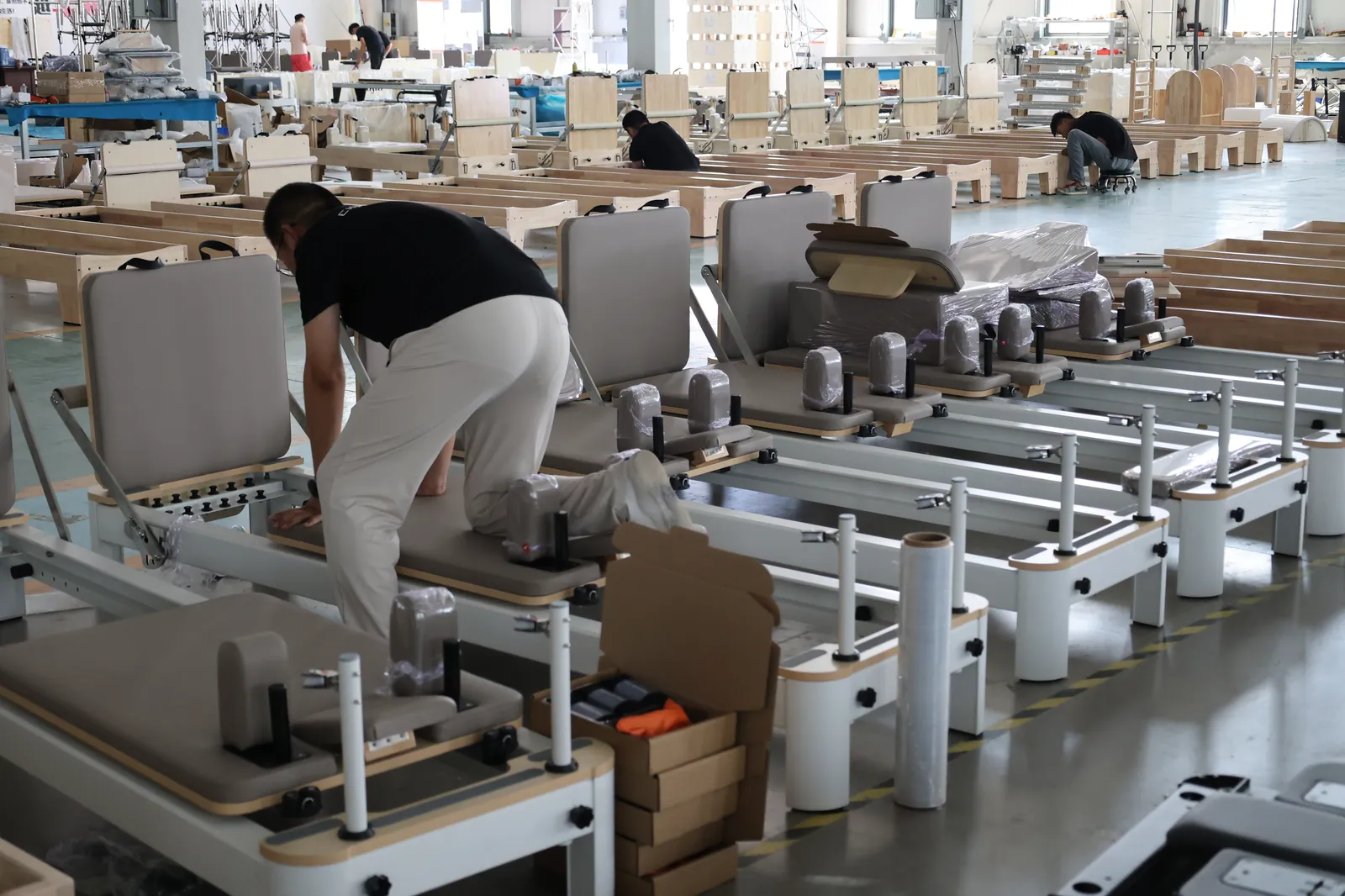
A real factory can send its paperwork before you pay a deposit. Ask for these, and make sure the company name is the same on every page:
- Business licence
- ISO 9001 certificate
- CE documents for the models you buy
- User manuals and labels
- Commercial invoice and packing list (at shipping)
Cheer holds CE and ISO 9001:2015, and all our products are CE certified. We send copies with your quote. For buyers in the EU we can also share our GPSR attestation from ECM (Italy). You can read what CE and ISO 9001 cover on our certification page, and the EU’s own guidance on product compliance is on Your Europe.
One warning. If a supplier sends a “CE certificate” PDF whose company name does not match the seller, or refuses to send anything until you pay, treat that as your answer.
How to tell a factory from a trading company
Ask questions only a factory can answer. How many units a month do you make? Do you build your own wooden frames? Can I see the production line on a video call today? Our answers: a 7,500 m² factory, 2,000–3,000 units a month, our own wood workshop, live video calls whenever you want to see the line or a sample machine, and third-party inspection if you want an independent check before shipping. We were founded in 2015 and have shipped to 80+ countries.
Step 4: Production timelines you can plan around
Standard models leave our factory in 7–10 days. With a logo, custom colors or a full OEM project, we confirm the lead time per order, because it depends on the models and the quantity. You get that date in writing with the proforma invoice.
Payment is a 30% deposit, which starts production, and a 70% balance. The fastest way to speed up an order is to confirm the specification quickly: model, color, logo file and shipping term.
Then add transit. Sea freight usually takes 25–45 days depending on the port, air 7–15 days. Leave at least two extra weeks for customs, delivery and setup if you are working towards a studio opening date.
Step 5: Choose a shipping term you can actually manage
Your shipping term decides who books the freight, who pays duties and where the risk moves from us to you. Here is the short version:
| Term | We arrange | You arrange | Best for |
|---|---|---|---|
| EXW | Goods ready at the factory | Pickup, export, freight, import | Buyers with their own China agent |
| FOB Tianjin | Delivery to Tianjin port and export clearance | Ocean freight, import, delivery | Importers with a freight forwarder |
| CFR / CIF | Freight to your port (CIF adds insurance) | Import clearance, duties, delivery | Buyers who can clear customs locally |
| DDP | Freight, duties and delivery to your door | Receiving the goods | First-time importers |
If you already work with a forwarder, FOB Tianjin keeps costs transparent and gives you control. If you have never cleared customs, DDP is the calmer choice: duties and delivery are handled, and you sign for crates at your door. DDP is available to most destinations and confirmed per destination when we quote. We don’t recommend EXW for a first order unless you have someone on the ground in China. For the full comparison, see DDP vs FOB vs CFR for reformers.
Step 6: After-sales, spare parts and warranty
Ask any supplier what happens when a part fails in month eight. A vague answer is a bad sign.
Our policy is simple: a 1-year warranty on the whole machine. Warranty spare parts ship within 3 days and we pay the shipping for them. Accessories and wear parts can also be bought separately, so you can keep a small spares kit in your warehouse. For your first order, I suggest a kit of spare springs, ropes and straps for every ten machines you sell. It turns a two-week wait into a same-day fix for your customer.
What a first order looks like for a real studio
Koco Reformer Pilates, a reformer studio in the UK, runs our maple reformer, model CP151A. If you want to see that model before you order, we can show it to you on a live video call from the factory.
Your first-import checklist
- Decide: reformers only, or a full studio range.
- Choose two or three models from our commercial Pilates reformers.
- Decide stock models or your own brand (OEM from 5 units).
- Order one sample, with your logo if you want to test it.
- Get the business licence, ISO 9001 certificate and CE documents before paying.
- Test the sample and approve it in writing.
- Pick a shipping term: FOB Tianjin with a forwarder, or DDP if this is your first import.
- Put the production date and the transit estimate on one calendar.
- Order a small spare-parts kit with the first shipment.
- Planning to resell? Read about our Pilates equipment distributor program.
Frequently asked questions
How do I start importing Pilates equipment from China as a first-time buyer?
Start small. Pick two or three reformer models, order one sample, check the factory’s documents, then choose a shipping term you can manage. At Cheer the MOQ is one unit, five units if you want your own brand, and you can mix models in one order, so a first import can be a test rather than a gamble.
Can I order just one Pilates reformer as a sample before a bulk order?
Yes. Our minimum order is one unit, and we can put your logo on a single sample. For a branded OEM order the minimum is five units. Use the sample to check carriage glide, spring feel, upholstery and packing, then approve it in writing so production matches what you tested.
What documents should a Chinese Pilates equipment factory give an importer?
Ask for the business licence, the ISO 9001 certificate, the CE documents for the models you buy, user manuals and labels, and at shipping a commercial invoice and packing list. Check that the company name matches on every page. Cheer holds CE and ISO 9001 and sends copies with your quote.
Which shipping term should a first-time importer choose: EXW, FOB, CIF or DDP?
If you already work with a freight forwarder, FOB Tianjin keeps costs clear and gives you control. If you have never cleared customs, DDP means duties and delivery are handled for you; we offer it to most destinations and confirm it per destination. EXW suits experienced buyers only. Get the named port or address written into the quote.
How long does it take to get Pilates reformers from a factory in China?
Plan production and transit separately. At Cheer, standard models are ready in 7–10 days; orders with a logo or full OEM work get a lead time confirmed per order, depending on models and quantity. Sea transit usually takes 25–45 days and air 7–15 days. Leave extra time for customs and setup before an opening date.
Ready to plan your first import? Tell us which models you are considering, your destination and whether you want your own logo. We reply within 12 hours with a quote, lead time and shipping options. Send your inquiry.
About the author. Tim Wu is a sales manager at Cheer Pilates Equipment and has ten years of personal experience in the Pilates equipment industry. He works with studios, distributors and brand owners on equipment choice, samples, OEM orders and shipping. Cheer Pilates Equipment was founded in 2015 and supplies buyers in 80+ countries.